On this page
- Before you get in: the briefing and the mask
- How to breathe through a snorkel
- How to stop your mask fogging
- Water in the snorkel: how to clear it and stop swallowing water
- Water in the mask
- How to float and use your fins
- If you feel panicky: the 30-second reset
- Why some people feel sick after snorkeling
- Small problems and quick fixes
- Your first snorkel at the Daymaniyat Islands
- Frequently asked questions
- Any other questions?
Short answer: to snorkel, fit the mask so it seals without the strap, put the snorkel in your mouth, lie flat on the water with your face down and breathe slowly and deeply through your mouth. Look down, not forward, so the top of the snorkel stays above the water, and kick gently from the hips with your fins. If water gets into the snorkel, blow out hard to clear it, then take your next breath carefully. On our trips the crew go through all of this in the briefing before the first stop.
Most first-timers are snorkeling happily within a few minutes. The ones who struggle usually have one of the same small problems: a mask that leaks or fogs, quick shallow breathing, or a mouthful of sea water. This guide covers each of them, with the fixes our crew use every day at the Daymaniyat Islands.
How to snorkel, at a glance
- Breathing
- Slow and deep, through your mouth only
- Mask
- Seals without the strap; no hair under the edge
- Head
- Face down, eyes on the reef below you
- Body
- Flat on the water, arms relaxed by your sides
- Fins
- Long, slow kicks from the hips, under the surface
- Water in the snorkel
- Blow out hard, then breathe in carefully
- Feeling uneasy
- Lift your head, float, raise your hand
Before you get in: the briefing and the mask
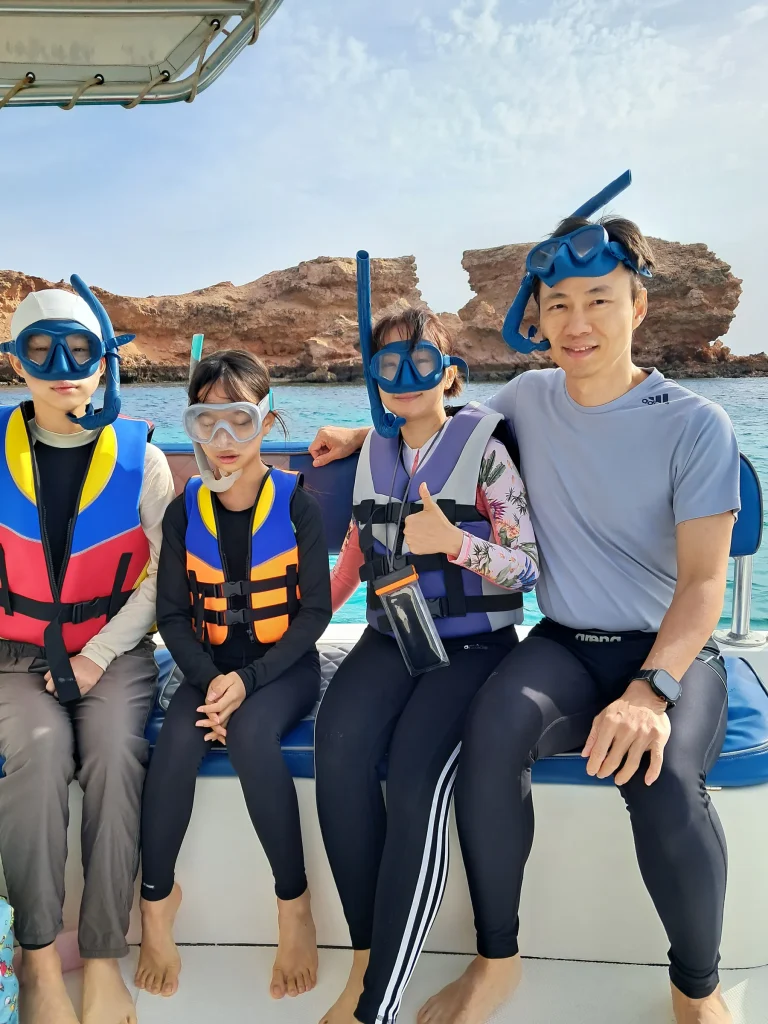
Before the first snorkel stop, our crew give a short briefing on fitting the mask, breathing through the snorkel and the hand signals to use in the water. Mask, snorkel, fins and a life jacket are included, and you are welcome to bring your own mask if you have one you like.
A mask that fits is the single biggest difference to your first snorkel. Check it on deck:
- The seal test. Hold the mask against your face without the strap and breathe in gently through your nose. If it stays on by itself, it fits. If air leaks in, try another mask.
- Hair out of the way. Push all hair away from the edge of the mask. A single strand under the seal lets water in.
- Strap above your ears, snug but not tight. A strap pulled too tight squashes the seal and leaks more, not less.
- Keep sunscreen off your forehead and the lens. It runs into your eyes and smears the glass.
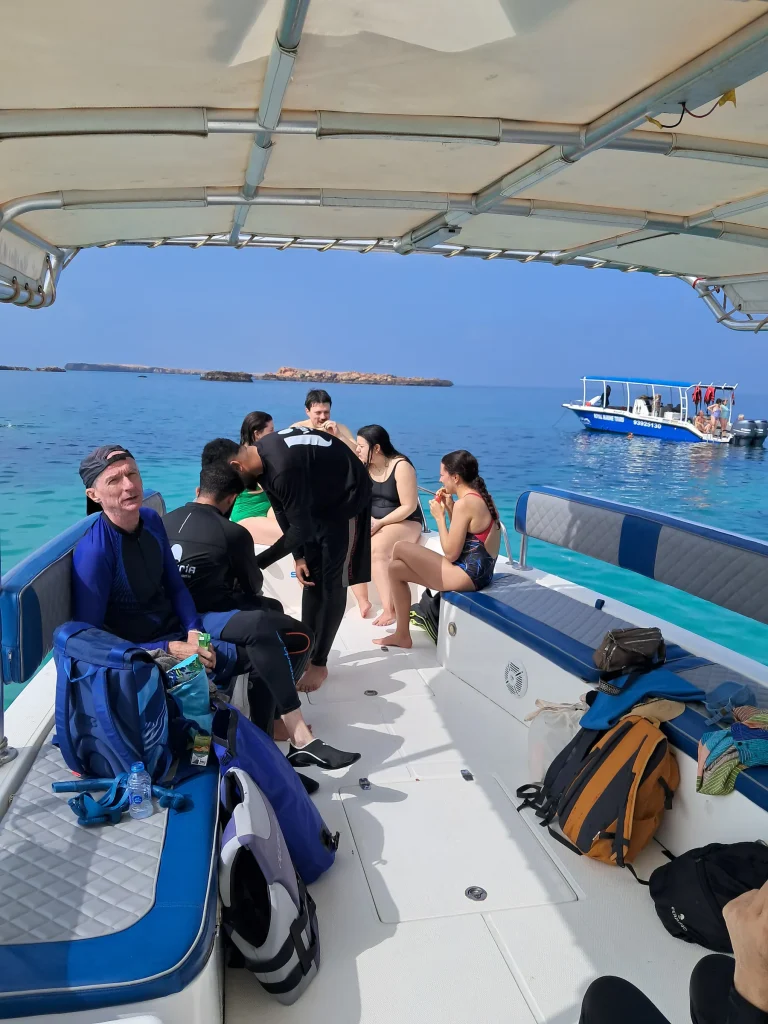
Put your fins on when you sit on the boat’s stairs, not on deck: walking in fins is how people trip. Then lower yourself into the water and hold the stairs while you get used to it.
How to breathe through a snorkel
Breathe only through your mouth, slowly and deeply, as if you were sighing. Close your lips softly around the mouthpiece and rest your teeth on the small tabs; there is no need to bite.
Slow, deep breaths matter more than people think. The tube holds a little used air that you breathe back in each time, so quick, shallow breaths leave you feeling short of air, which then makes you breathe even faster. Long breaths in and out break that loop. If you feel breathless, stop kicking, float and breathe slowly for a minute.
Practise before you swim off: hold the boat’s stairs, put your face in the water and take ten slow breaths through the snorkel. Once that feels normal, you are ready.
How to stop your mask fogging
Masks fog when warm, damp air from your face meets the cooler glass. A few things help:
- Treat the lens just before you get in: a drop of anti-fog, a little diluted baby shampoo, or the old snorkeler’s trick of spitting on the inside of the glass. Rub it over the lens and rinse lightly in sea water.
- Don’t breathe out through your nose into the mask; breathe out through the snorkel.
- Keep the mask on your face, not on your forehead, between swims. On your forehead it warms up in the sun and fogs as soon as you put it back on.
- If it fogs in the water, let a little water in at the bottom of the mask, tilt your head so it washes across the glass, and clear it.
A brand-new mask you have bought yourself fogs badly until the factory coating is cleaned off. Dive shops sell cleaners for this; do it at home before your trip.
Water in the snorkel: how to clear it and stop swallowing water
Water gets into a snorkel for a few reasons: you lift your head to look forward, which tips the top of the tube into the water; a small wave splashes over it; or your lips are loose around the mouthpiece because you are talking or laughing. Swallowing it usually happens on the next breath.
- Blow out hard and short through the snorkel, like saying “too!”. That pushes the water out of the top.
- Take the next breath slowly and carefully. If a little water is left, you will feel it before it reaches your throat; blow again.
- If you get a mouthful, lift your head, take the snorkel out, cough it out and breathe normally for a moment. Then start again.
To stop it happening, keep looking down at the reef, not ahead, so the tube stays upright, and keep your lips sealed around the mouthpiece. On choppier days the captain chooses the snorkel spots by the sea and the weather, and staying close to the boat keeps you out of the bigger waves.
Water in the mask
A few drops are normal. If more comes in, lift your head out of the water, hold the stairs or float on your back in your life jacket, lift the bottom of the mask away from your face so the water drains out, and press it back on. If it keeps leaking, check for hair under the seal or ask the crew for another mask.
How to float and use your fins
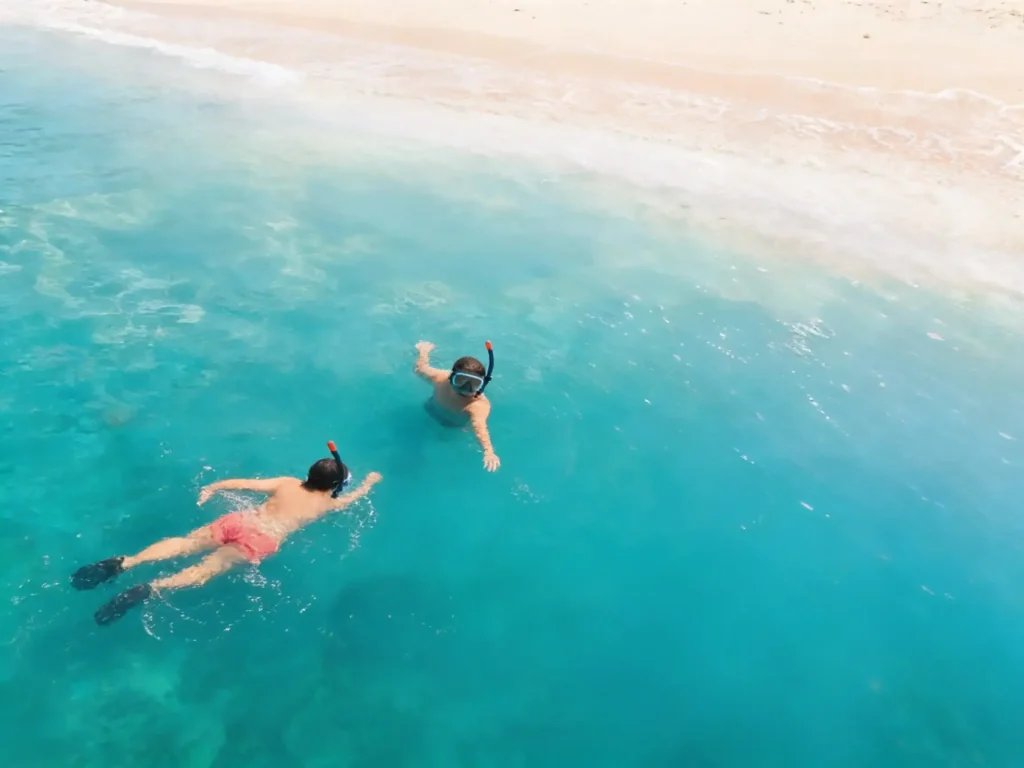
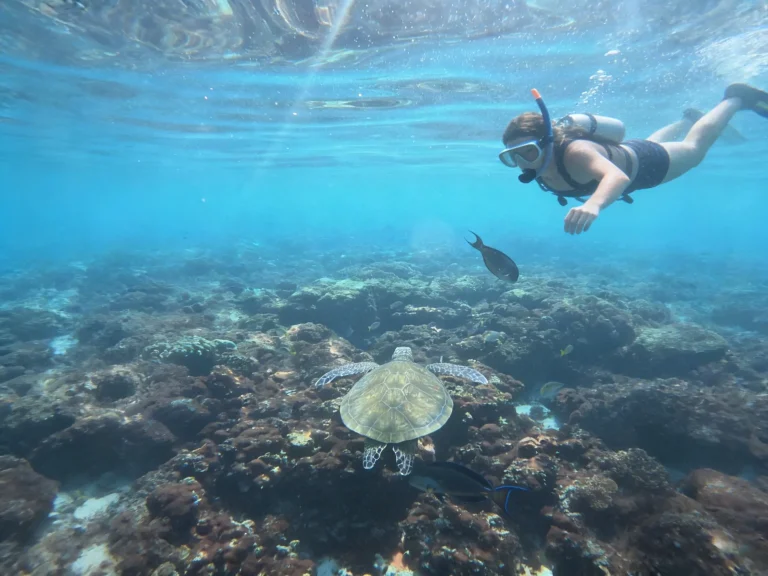
Lie flat with your face in the water and your arms relaxed by your sides; the less you move your arms, the more fish you see. Kick slowly from the hips with your legs almost straight, keeping the fins under the surface. Splashing fins tire you out and scare the animals away.
Never stand on the reef, even if it looks shallow: coral is a living animal, and it cuts. If you want to stop, simply float. And keep a respectful distance from turtles: our guide to swimming with sea turtles explains how.
If you feel panicky: the 30-second reset
Stop, float, breathe
- Lift your head out of the water.
- Take the snorkel out of your mouth and breathe normal air.
- Let the life jacket hold you. Lean back and float; you can’t sink.
- Raise your hand or call out. The crew are watching, and one of them will come to you in the water if you need help.
- Swim back to the stairs and rest on board. Try again when you feel ready, or at the second stop.
Feeling uneasy at first is normal, especially if you are not a strong swimmer. Our guide Can you snorkel if you can’t swim? walks through snorkeling with a life jacket step by step.
Why some people feel sick after snorkeling
It is rare on our trips, but when it happens there are usually two causes. The first is motion sickness: on a moving boat, or floating face down in a swell, your inner ear feels movement that your eyes don’t match, and that mismatch makes you queasy. The second is swallowed air or sea water from gulping breaths, which can leave your stomach bloated and uncomfortable.
- On the boat: sit in the middle and low down, look at the horizon, get fresh air, and avoid a heavy meal or alcohol before the trip.
- In the water: breathe slowly, keep your lips sealed, and take a break floating on your back if you start to feel off.
- If you get seasick easily, choose a morning trip, when the sea is often calmer, and ask a pharmacist about seasickness medicine before the day. Some cause drowsiness, so ask which suits a day on the water.
- Drink water during the trip: sun and salt dry you out, and that makes nausea worse.
Small problems and quick fixes
- A beard or moustache: hair under the seal lets water in. Expect a little water and clear the mask now and then, and ask the crew to help you find the best-fitting mask.
- A sore jaw: you are biting the mouthpiece. Relax your jaw and let your lips do the sealing.
- Do you need a wetsuit? Not for snorkeling: the sea is warm enough all year. Wetsuits are provided on diving trips only.
- Sunburned back: the back of your neck and legs face the sun the whole time. Wear a swim top and reef-safe sunscreen; our packing checklist has the rest.
- Getting tired: slow down. Snorkeling is meant to be lazy: float, breathe, look.
Your first snorkel at the Daymaniyat Islands
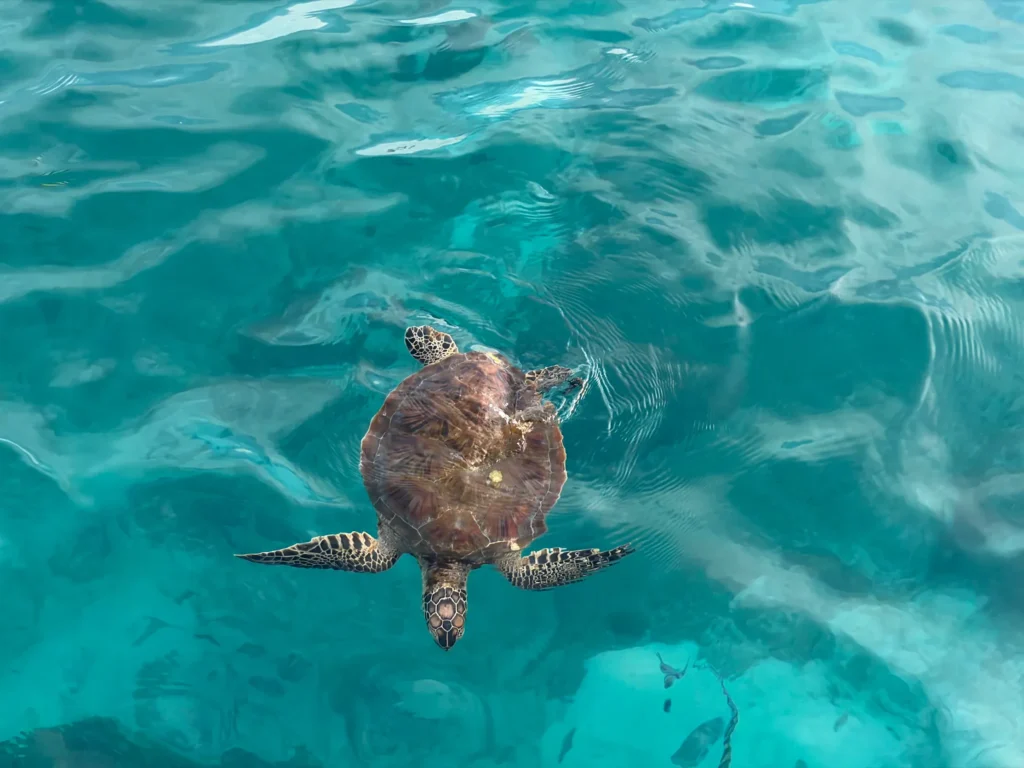
Our half-day snorkeling trip from Seeb Marina is a good first snorkel: about four hours, two stops chosen by the captain on the day, a briefing before you get in, and the boat with its stairs close by the whole time. The water is usually clear, and turtles are commonly seen, though never guaranteed. Our guide to your first Daymaniyat Islands trip covers the rest of the day.
Frequently asked questions
How do you breathe while snorkeling?
Through your mouth only, slowly and deeply. Keep your lips sealed around the mouthpiece and breathe out through the snorkel, not your nose. Quick, shallow breaths make you feel short of air.
Is snorkeling hard to learn?
No. Most first-timers are snorkeling within a few minutes. Practise a few slow breaths with your face in the water while holding the boat’s stairs, then let go when you feel ready.
How do I stop my snorkel mask fogging?
Treat the inside of the lens just before you get in, with anti-fog, a little diluted baby shampoo or spit, and rinse lightly. Don’t breathe out through your nose, and keep the mask on your face rather than on your forehead between swims.
How do snorkels not let water in?
The top of the tube stays above the surface as long as you look down rather than forward. Small amounts that do get in are blown out with one short, hard breath.
What do I do if water gets in my snorkel?
Blow out hard through the snorkel to push the water out, then take your next breath slowly. If you get a mouthful, lift your head, take the snorkel out and cough it out before starting again.
Why do I feel sick after snorkeling?
Usually motion sickness from the boat or the swell, or swallowed air or sea water from gulping breaths. Sit in the middle of the boat and look at the horizon, breathe slowly in the water, drink water, and ask a pharmacist about seasickness medicine if you get seasick easily. On our trips it is rare.
Can you go fully underwater with a snorkel?
Only for a few seconds, holding your breath, and water fills the tube while you are down. Blow it clear when you come back up. With a life jacket on you stay at the surface, which is how most guests snorkel with us.
Can I snorkel with a beard?
Yes. Hair under the seal lets some water in, so expect to clear the mask now and then, and ask the crew to help you find the best-fitting mask.
Do I need my own snorkeling gear?
No. A mask, snorkel, fins and life jacket are included on our snorkeling trips. You are welcome to bring your own mask if you prefer.
Any other questions?
Ask us on WhatsApp before your trip: nervous first-timers are welcome, and we would rather answer a question than have you worry about it. We reply at any time of day, usually within 10 to 30 minutes.
Take the trip
30 OMR per adult, 15 OMR per child + VAT
- About 4 hours
- Seeb Marina
- All year
Take the trip
From 230 OMR per boat + VAT
- About 4 hours
- Seeb Marina
- All year