On this page
- What is the difference between snorkeling and scuba diving?
- Is scuba diving harder than snorkeling?
- Do you need a certificate to scuba dive?
- Can non-swimmers snorkel or scuba dive?
- What will you see snorkeling and diving?
- How much does each cost?
- Snorkeling or scuba diving: which should you choose?
- Can you do both, or split your group?
- Safety: ears, flying and health
- Frequently asked questions
- Still deciding?
Short answer: snorkeling means floating at the surface and looking down through a mask, with no training and no age limit. Scuba diving means breathing from a tank and swimming underwater with an instructor or guide. At the Daymaniyat Islands both show you turtles, reef fish and coral. Snorkeling is the easy, cheaper choice for everyone, including non-swimmers and children. A first scuba dive (Discover Scuba, 14+, no certificate needed) takes you down to a maximum of 12 metres for 20 to 30 minutes, closer to the reef and to the animals that stay near the bottom.
“Should we snorkel or try diving?” is something guests ask us a lot, often for a group where not everyone wants the same thing. This guide compares the two side by side, with the real prices, ages and depths of our trips from Seeb Marina, so you can choose for yourself.
| Snorkeling | First dive (Discover Scuba) | |
|---|---|---|
| What you do | Float at the surface, breathing through a snorkel | One dive with an instructor, after a briefing and basic training |
| How deep | At the surface | Up to 12 m |
| Time underwater | Two snorkel stops | 20 to 30 minutes |
| Certificate | No | No |
| Minimum age | None, children with an adult | 14 |
| Non-swimmers | Yes, with a life jacket | Only if the instructor agrees |
| Equipment | Mask, snorkel, fins, life jacket | Full scuba kit and wetsuit |
| Price with VAT | 31.50 OMR adult, 15.75 OMR child | 63 OMR |
| Flying afterwards | No wait | Wait 18 to 24 hours |
Both leave from Seeb Marina and take about 4 to 4.5 hours in total. Prices are for 2026.
Already certified? Our certified trip is two guided dives of about an hour each, down to 30 metres within your certification, for 73.50 OMR with VAT. Every certification agency is accepted, and divers of any age can join with a valid certificate.
What is the difference between snorkeling and scuba diving?
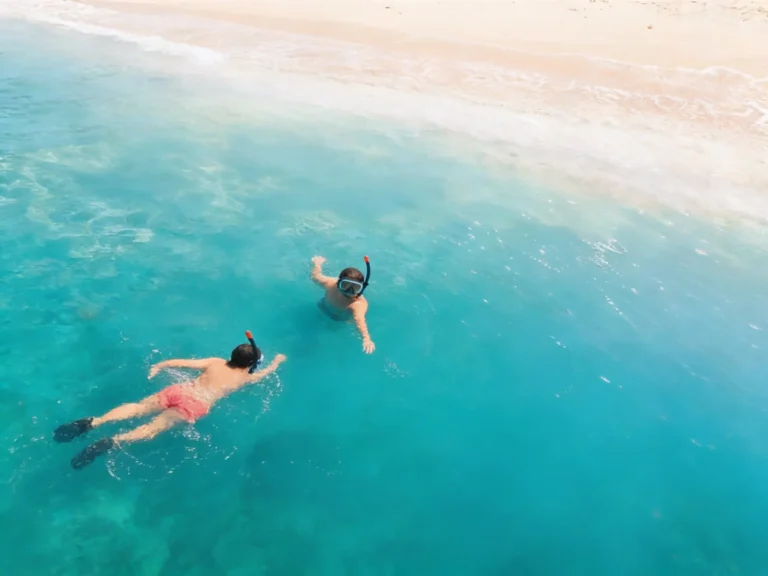
When you snorkel, you lie face down on the water and breathe through a tube that sticks up above the surface. You see everything below you, but you stay at the top. When you scuba dive, you carry your air with you: a tank on your back, a regulator in your mouth and a jacket (the BCD) that lets you float or sink. That is what lets you go down to the reef and stay there.
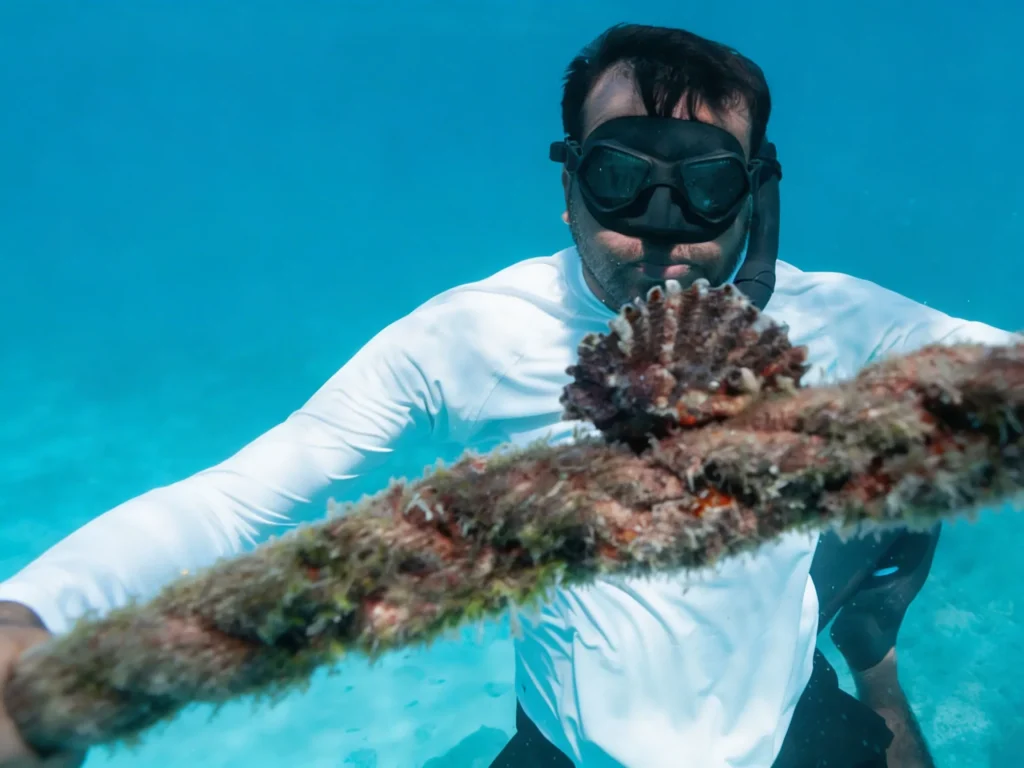
So the real differences are depth, time and preparation. A snorkeler can start within minutes of putting on a mask. A diver needs a briefing, some practice and someone experienced next to them, and in return gets half an hour or more right next to the coral.
Is scuba diving harder than snorkeling?
Yes, a little, but it is not hard in the way people fear. Snorkeling only asks you to breathe calmly through your mouth and float. A first dive asks for three new skills, all taught before you go down:
- Breathing from the regulator: slowly and steadily, never holding your breath.
- Clearing your ears: gently equalising the pressure as you go down, the same feeling as on a plane landing.
- Clearing your mask: pushing out a little water if some gets in.
On a first dive the instructor supervises you directly the whole time and keeps you within 12 metres. Most people find the first minutes strange and then forget about the equipment. If your ears won’t clear or you feel uneasy, you simply come back up. Our beginner’s guide to Discover Scuba goes through the dive step by step.
Do you need a certificate to scuba dive?
Not for a first dive. Discover Scuba is made for people with no certificate: you get a safety briefing, learn the basics and do one supervised dive with a professional instructor. You need to be at least 14, fill in a short medical questionnaire, be sober, and have the instructor’s OK before you dive.
To dive on your own with a buddy, or to join two guided dives at 30 metres, you need a certificate such as Open Water. We accept every certification agency; just show your card when you book and tell us roughly how many dives you have done and when your last one was.
Can non-swimmers snorkel or scuba dive?
Non-swimmers can snorkel with us: everyone gets a life jacket, you can hold on to the boat’s stairs, and a crew member gets in the water with you if you need help. Our guide Can you snorkel if you can’t swim? explains it step by step.
Scuba is different. Some non-swimmers can do a supervised first dive, but it is never automatic: the instructor checks how confident and comfortable you are in the water and whether you can do the safety exercises, and decides on the day. If you can’t swim and you are unsure, snorkeling is the safer first step.
What will you see snorkeling and diving?
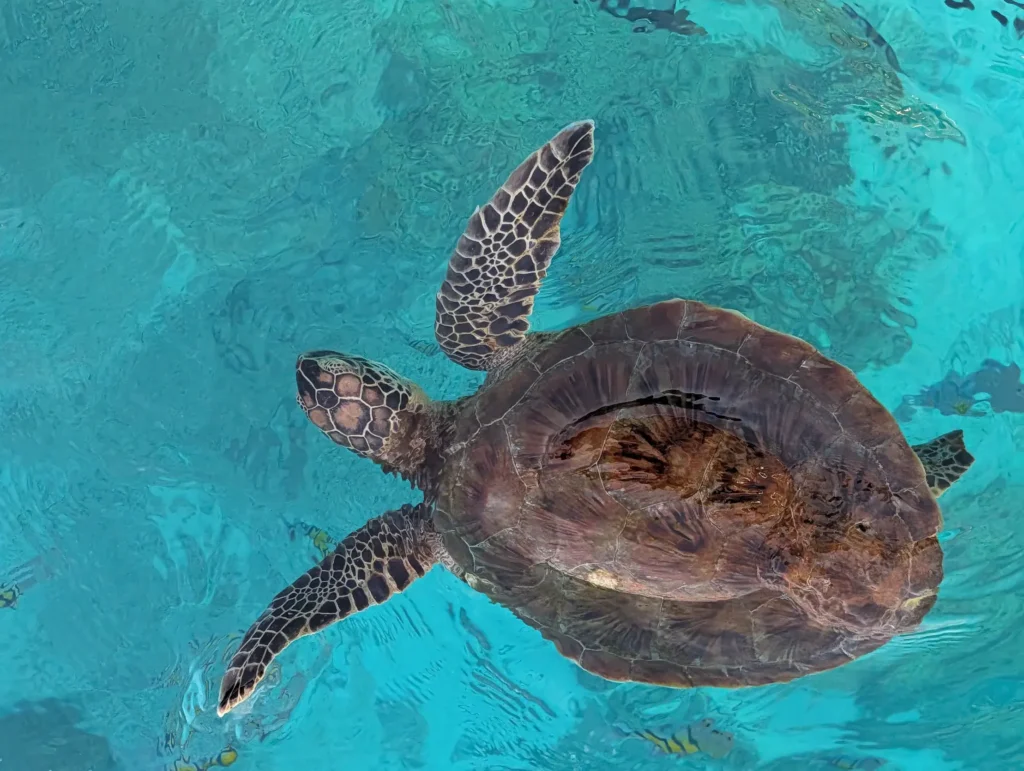
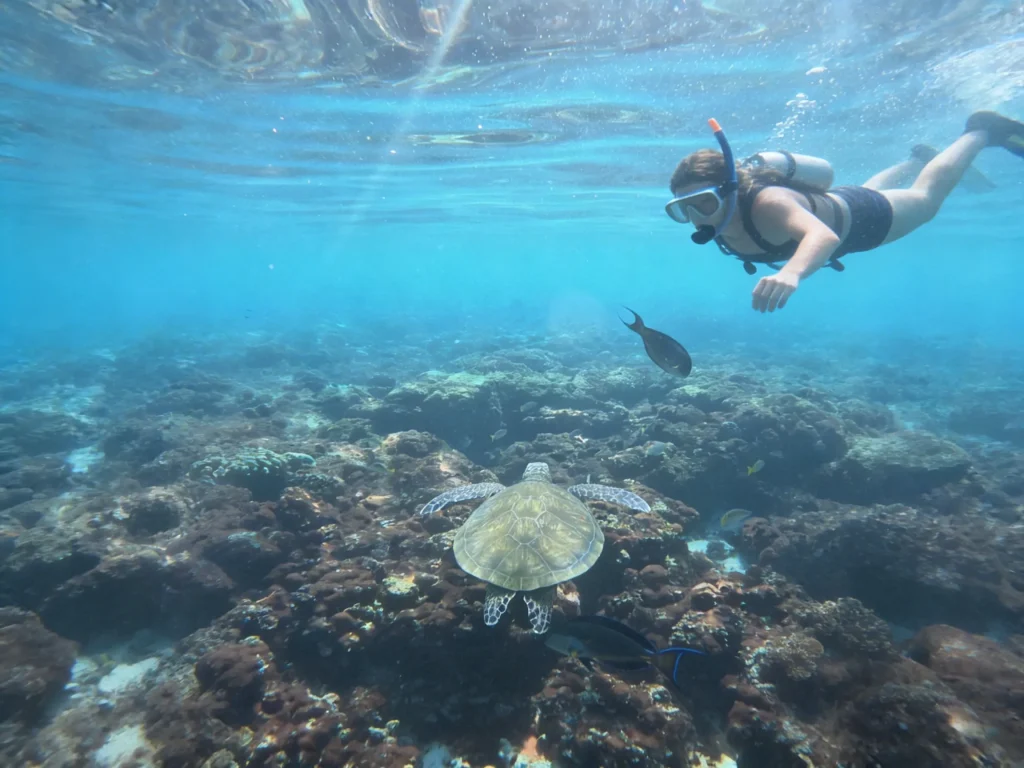
More than people expect from the surface. The water around the islands is usually clear, with 10 to 20 metres of visibility, so snorkelers see turtles, shoals of reef fish and coral below them. Turtles are commonly seen on both snorkeling and diving trips, though, like all wildlife, never guaranteed.
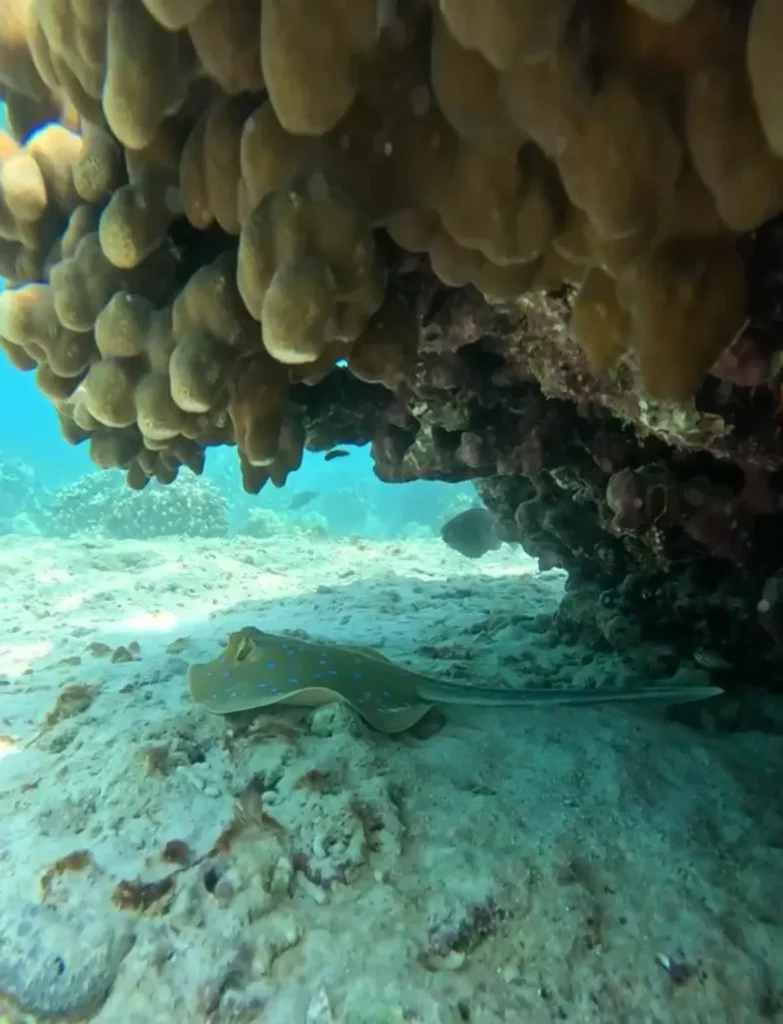
Diving takes you to the animals that live close to the bottom or under ledges: moray eels, stingrays resting on the sand and barracuda, and divers see reef sharks more often than snorkelers. Now and then a leopard shark turns up too. You also see the coral from the side and up close, which is a very different view from looking down on it. Our guide to Daymaniyat Islands marine life has more.
How much does each cost?
Snorkeling is the cheapest way to see the reef: 30 OMR per adult and 15 OMR per child, plus 5% VAT. A first dive costs 60 OMR plus VAT, and certified divers pay 70 OMR plus VAT for two dives. All three include the boat, the reserve permit, the equipment, snacks and drinks.
Snorkeling or scuba diving: which should you choose?
Choose by what matters to you
- Snorkel if…
- you can’t swim or aren’t confident in the water, you’re travelling with children under 14, you want the cheapest option, or you’re flying home within a day.
- Try a first dive if…
- you are 14 or older, comfortable in the water, curious about diving, and want to get closer to the reef than the surface allows.
- Book certified dives if…
- you hold a diving certificate and want two full dives at the islands’ dive sites.
- Not sure?
- Snorkel first. If you love it, a first dive on another day is the natural next step.
Can you do both, or split your group?
Often, yes. After a Discover Scuba dive there is usually time left in the trip to snorkel, swim or relax on the boat, depending on the dive schedule. And if one person in your group wants to dive while the others snorkel, it may be possible to put everyone on the same boat: the snorkelers pay the normal snorkeling price. This needs planning with the dive team, so mention it when you book.
Safety: ears, flying and health
Before you choose
- Flying home soon? After diving, wait 18 to 24 hours before you fly. Snorkeling needs no wait.
- A cold or blocked nose makes clearing your ears hard. Snorkel instead and dive another day.
- Health conditions: if you have a heart condition, asthma, are pregnant or have a similar concern, tell us before booking and ask your doctor first.
- No alcohol before diving.
- Never hold your breath on scuba. Breathe slowly the whole time.
- The captain checks the sea before every trip and decides when it is safe to get in.
Ready to compare the trips themselves? See the half-day snorkeling trip and the scuba diving trip, which covers both the first dive and certified dives.
Frequently asked questions
Are scuba diving and snorkeling the same?
No. Snorkelers float at the surface and breathe through a tube. Scuba divers breathe from a tank and go underwater. On our trips a first scuba dive goes down to a maximum of 12 metres with an instructor.
Which is harder, snorkeling or scuba diving?
Scuba diving, a little. Snorkeling only needs calm breathing and floating. A first dive adds breathing from a regulator, clearing your ears and clearing your mask, which the instructor teaches before you go down.
Is snorkeling safer than scuba diving?
Snorkeling has fewer things to manage because you stay at the surface. A first scuba dive is made for beginners: the instructor supervises you directly, keeps you within 12 metres, and you can signal to end the dive at any time.
Can a non-swimmer do scuba diving?
Sometimes, but it is never automatic. The instructor checks your confidence and comfort in the water and whether you can do the safety exercises, and decides on the day. Non-swimmers can always snorkel with a life jacket.
Do you need a licence to scuba dive?
Not for a first dive. Discover Scuba needs no certificate: you are 14 or older, fill in a medical questionnaire and dive with an instructor. To join two guided dives at up to 30 metres you need a certificate from any agency.
How deep do you go on a Discover Scuba dive?
Up to 12 metres, for about 20 to 30 minutes, with the instructor next to you.
How old do you have to be to snorkel or scuba dive?
Snorkeling has no minimum age: children join with an adult. A first scuba dive is from 14. Certified divers of any age can dive with a valid certificate.
Can I fly after snorkeling or scuba diving?
After snorkeling, yes, there is no wait. After scuba diving, wait at least 18 to 24 hours before you fly.
Can I snorkel and scuba dive on the same trip?
Often, yes. After a Discover Scuba dive there is usually time left to snorkel, depending on the dive schedule. A group can also mix divers and snorkelers on one boat if it is arranged with the dive team in advance.
Is snorkeling or diving better in Oman?
Both are good at the Daymaniyat Islands near Muscat, where the water is usually clear and turtles are common. Snorkel for the easiest and cheapest day; dive to get closer to the reef and the animals that stay near the bottom.
Still deciding?
Message us on WhatsApp with your ages, how comfortable you are in the water and your dates, and we will tell you honestly which trip fits. We reply at any time of day, usually within 10 to 30 minutes.
Take the trip
30 OMR per adult, 15 OMR per child + VAT
- About 4 hours
- Seeb Marina
- All year
Take the trip
60 OMR per adult + VAT
- About 4.5 hours
- Seeb Marina
- All year