

Most travel guides about the Daymaniyat Islands focus on the same three things: coral reefs, sea turtles, and snorkeling. And yes, all three are extraordinary. But if you are visiting for the first time, what you actually want to know is something more practical: what does the day feel like from the moment you arrive at the marina to the moment you step back on the mainland?
This guide fills that gap. Written from the perspective of your local expert team at Daymaniyat Islands, it walks you through a first-time Daymaniyat Islands tour hour by hour, answers the questions new visitors always ask on the boat, and gives you the insider knowledge that transforms a good trip into an unforgettable one.
Why This Guide Is Different From Every Other Daymaniyat Article
Search for Daymaniyat Islands online and you will find dozens of articles ranking the snorkeling, listing the marine life, or comparing tour prices. What you will not find is a genuine first-timer’s walkthrough that sets expectations honestly and prepares you for the small surprises that catch new visitors off guard.
We have guided thousands of guests from over 40 countries through these waters. The questions they ask before and after the trip are remarkably consistent. This article answers all of them, before you even pack your bag.
Before You Go: What Most First-Timers Get Wrong
1. Wearing the wrong sunscreen
The Daymaniyat Islands are a fully protected marine nature reserve. The coral reefs here are among the healthiest in the entire Middle East precisely because visitor impact is tightly managed. One of the biggest threats to reef health from tourism is chemical sunscreen washed off by swimmers.
Standard sunscreens contain oxybenzone and octinoxate, compounds that have been shown to bleach coral even at very low concentrations. Reef-safe mineral sunscreens (zinc oxide or titanium dioxide based) are the responsible choice. Apply generously before boarding, as applying on the boat means runoff goes straight into the reserve.
2. Underestimating the sun
The Arabian Sea reflects sunlight with intensity that catches many visitors off guard, especially those arriving from cooler climates. Even on overcast days, UV exposure is significant. Pack a rash guard or long-sleeve swim shirt in addition to sunscreen. Your skin will thank you after the second snorkel stop.
3. Not charging underwater camera batteries the night before
This sounds small. It is not. The visibility at the Daymaniyat Islands regularly reaches 15 to 25 metres, and sea turtle encounters are common. A dead GoPro battery is genuinely heartbreaking when a hawksbill glides past your mask at arm’s length. Charge everything the night before and bring a spare SD card.
4. Expecting a beach holiday
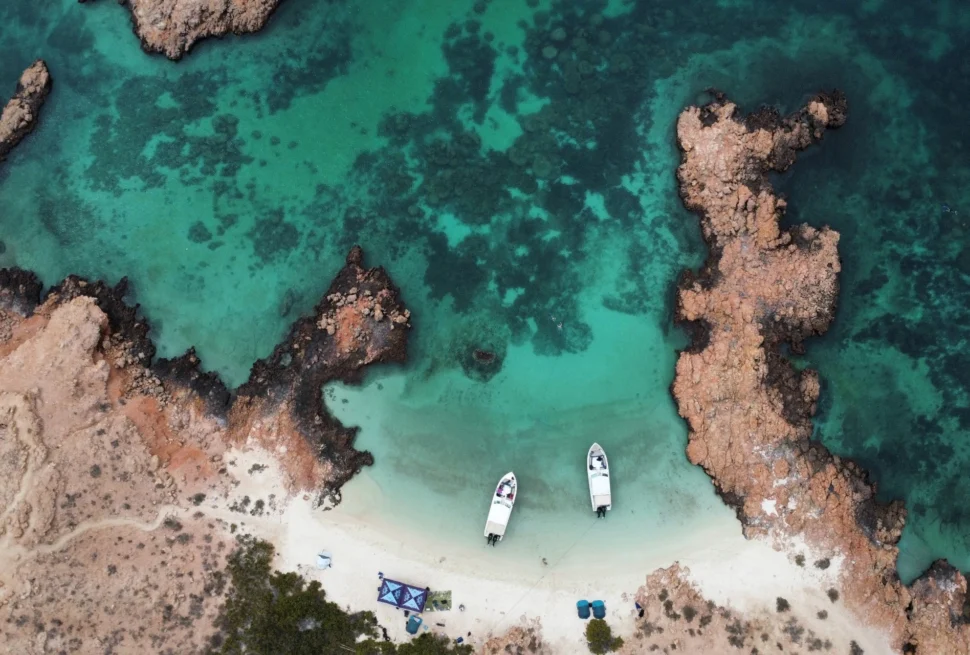
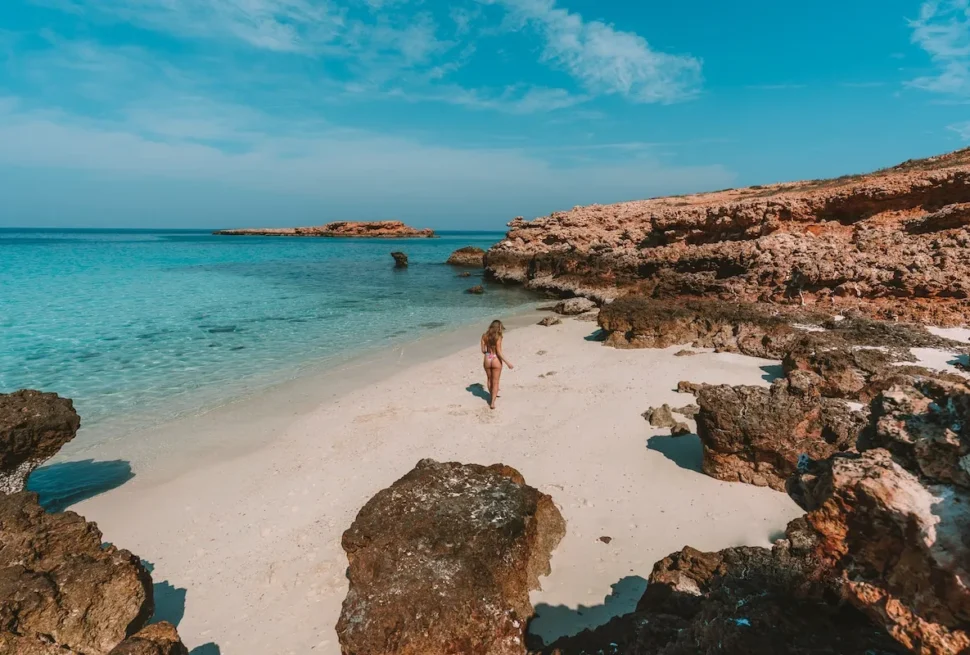
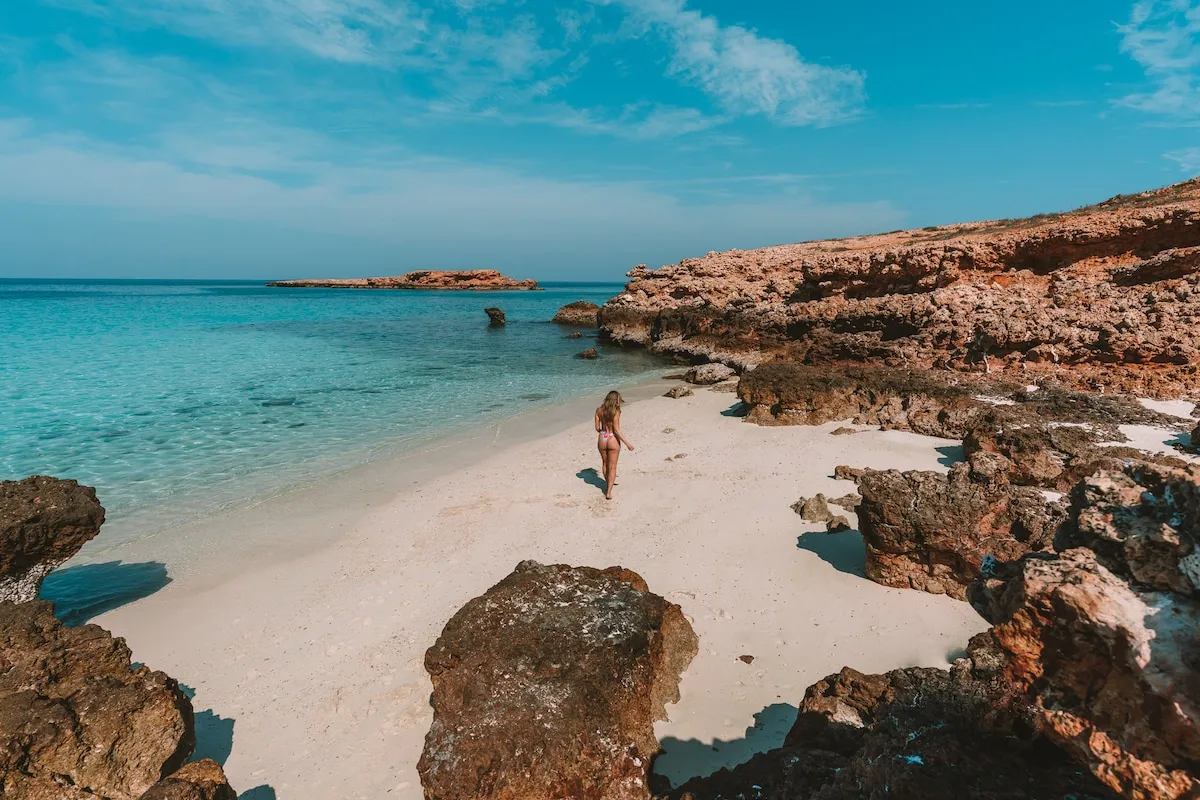
The Daymaniyat Islands are a nature reserve, not a resort destination. The islands themselves are rocky limestone outcroppings with narrow sandy beaches. There are no sunbeds, no beach bars, no permanent infrastructure of any kind. The beauty is entirely natural and unmediated. If you arrive expecting Bali or Maldives-style beach amenities, recalibrate. If you arrive expecting a raw, unspoiled wilderness experience, you will be astonished.
Your First-Time Daymaniyat Islands Tour: Hour by Hour
Arrival at Al Musannah | 06:30 – 07:00
Morning tours typically depart from Al Musannah Beach, approximately 90 kilometres northwest of Muscat along the coastal highway. Most guests drive directly; parking is straightforward. You will meet your guide and fellow travellers at the designated meeting point. If you are connecting from central Muscat, allow around 90 minutes for the drive, factoring in morning traffic near the city.
Tip from our guides: The morning light over the Gulf of Oman at this time of day is genuinely spectacular. Leave Muscat early enough to take it in from the coast road rather than rushing.
The Boat Crossing | 07:00 – 07:45
The crossing to the Daymaniyat Islands takes approximately 45 minutes by motorboat. This is not dead time. Keep your eyes on the water from the moment you clear the marina. Spinner dolphins and bottlenose dolphins regularly accompany boats in these waters, riding the bow wave and leaping alongside. Some guests see their dolphins here before they ever put on a mask.
Your guide will use the crossing to brief you on reef-safe snorkeling conduct, how to read the conditions at the two snorkel sites, and what marine life to watch for. Pay attention. These briefings are drawn from years of daily observation and dramatically improve what you see underwater.
First Snorkel Site | 08:00 – 09:30
The boat anchors at the first snorkel site, always chosen based on current conditions and wind direction that morning. This is how professional guides work: the “best site” is not fixed on a map, it is the site where conditions are optimal right now. This is one of the clearest advantages of booking with an experienced local operator rather than relying on GPS coordinates from a forum post.
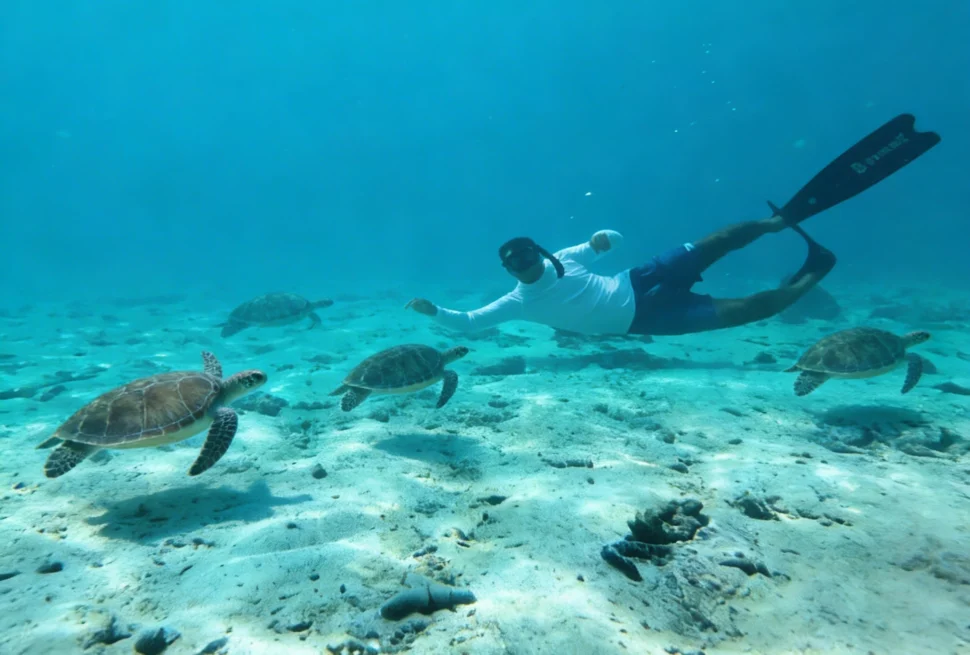
At the first site, take your time getting comfortable with your equipment before heading away from the boat. The guides will help first-time snorkelers with mask fit and breathing technique. Once you are settled, the underwater world opens up. Coral gardens in remarkable health, parrotfish in vivid turquoise and magenta, moray eels peering from crevices, and very likely, a hawksbill or green sea turtle on the reef.
First-timer tip: If you see a sea turtle, stay calm, stay still, and let it come to you. Chasing turtles causes them stress and ruins the encounter. Turtles that feel unthreatened will often pause and investigate their own curiosity about you. Patience produces magic.
Second Snorkel Site | 10:00 – 11:30
The second snorkel stop is typically in a different part of the reserve, often with different reef topography and species. Where the first site might feature broad, shallow coral gardens ideal for surface snorkeling, the second might have a more dramatic drop-off with larger fish species deeper down. Experienced snorkelers who can free-dive even a few metres will see significantly more.
This is also the site where underwater photographers get their best shots. By now you know the environment, your breathing is relaxed, and you have the confidence to slow down and observe rather than swim.
Return Crossing and Landing | 11:30 – 12:00
The return crossing is typically calmer than the morning departure as sea conditions often settle through the day. Use this time to dry off, eat any snacks you brought, and decompress. The guides will be happy to answer questions about what you saw and share knowledge about the reserve’s conservation history.
Arriving back at Al Musannah, most guests report the same feeling: a combination of deep calm and genuine astonishment. The Daymaniyat Islands have a way of reordering your sense of what is remarkable about the natural world.
What You Will Almost Certainly See on a First Visit
We do not guarantee specific sightings because wildlife is not theatrical. What we can tell you is what our guides observe on the overwhelming majority of trips:
- Hawksbill sea turtles (Eretmochelys imbricata): present year-round on the reef; sightings on a typical snorkeling trip are extremely common
- Green sea turtles (Chelonia mydas): most frequently spotted from June to September during nesting season, but resident in the water year-round
- Spinner or bottlenose dolphins: commonly seen on the boat crossing in both directions
- Parrotfish, wrasse, and butterflyfish: abundant across every reef site
- Moray eels: frequently spotted in coral crevices; their bark is far worse than their bite
- Lionfish: present and beautiful; our guides will point them out and ensure you do not accidentally brush against their venomous spines
- Stingrays: often spotted resting on sandy patches between coral heads
What you are less likely to see but might: reef sharks (rare but not unheard of, completely harmless to snorkelers), whale sharks (seasonal, typically July to October on the crossing route), octopus (masters of camouflage, but our guides have sharp eyes).
The Conservation Story Behind Every Dive Permit You Buy
The Daymaniyat Islands have been a protected nature reserve since 1996, managed under Royal Decree and overseen by Oman’s Environment Authority. What makes this reserve genuinely exceptional is not just its legal status but how that status is actively enforced.
Visitor numbers are strictly capped daily. The islands are divided into zones, with some areas restricted exclusively to nesting turtles and permitted only for conservation researchers and government rangers. Permit fees and licensed operator revenues fund the ranger teams, patrol boats, nest monitoring equipment, and marine clean-up operations that keep the reef healthy.
In practical terms: every booking made through a licensed operator like Daymaniyat Islands directly supports the patrol boats that intercept illegal fishing vessels and remove ghost nets from the reef. The economics of conservation and the economics of ethical eco-tourism are, here, the same economics.
Local fishing communities from Al Sawadi and Barka have been integrated into the eco-tourism model as licensed boat operators and guides. When fishermen earn more from sustainably guiding tourists than from overfishing, conservation and livelihood align. This is what genuine community-based marine conservation looks like in practice.
Practical Information for First-Time Visitors
Best time to visit
October through April offers the calmest sea conditions, best water visibility (15 to 25 metres), and most comfortable temperatures. This is also the camping season, when licensed operators can arrange overnight stays on the beach.
May through September is sea turtle nesting season. Access to beaches is restricted to protect nesting sites, but snorkeling tours continue and turtle sightings in the water are extremely common. Summer heat and occasionally rougher seas are the trade-off.
What to bring
- Reef-safe mineral sunscreen (apply before boarding, not on the boat)
- Rash guard or long-sleeve swim shirt
- Towel and dry change of clothes
- Waterproof bag for your phone and valuables
- Underwater camera or GoPro with charged battery and clear SD card
- Refillable water bottle (our tours include water, but extra hydration never hurts)
- Light snacks if you have specific dietary needs
What is included with Daymaniyat Islands tours
All snorkeling equipment (mask, fins, snorkel) is provided and sanitized before each trip. Life jackets are supplied. Reserve entry permits are arranged and included in the price. Guides are licensed local marine experts. Refreshments and snacks are provided onboard.
Is it suitable for non-swimmers?
Yes, with caveats. Life jackets are provided for all guests and buoyancy noodles are available. Many non-swimmers or weak swimmers have had wonderful experiences floating at the surface watching the reef below. That said, you will get significantly more from the experience with basic swimming confidence. The guided snorkeling briefing will help you assess your own comfort level.
Are children welcome?
Absolutely. Families with children of all ages join our tours regularly. The calm, shallow conditions at the snorkel sites make them accessible for young first-timers. Children over 8 generally take to snorkeling very quickly with a little guidance from our crew.
Why Book Directly With a Licensed Local Operator
The Daymaniyat Islands are Oman’s most ecologically significant marine protected area. Access requires official permits that are issued only to licensed operators. Booking through a licensed local operator means those permits are handled correctly, the reef-safe protocols are genuinely followed, and your guides are the people who know these waters most intimately.
Third-party booking platforms have their place for some activities. For a nature reserve this sensitive, with conditions this variable and marine encounters this dependent on local knowledge, the difference between a licensed local guide and a generic operator is the difference between an extraordinary experience and a disappointing one.
Our team at Daymaniyat Islands has guided guests across every season, every sea condition, and every type of encounter this reserve offers. When you book with us, you are not buying a ticket to a location. You are booking access to people who have given years of their lives to knowing it.
Ready to Plan Your First Visit?
Whether you are planning a half-day morning snorkeling tour, a private boat experience, or an overnight camping trip under the Arabian stars, our team is ready to help you choose the right experience and handle every detail.
Contact us on WhatsApp: +968 7646 4192
Explore all tours: Daymaniyat Trips