On this page
- What makes the Daymaniyat Islands a protected area?
- Why the islands are protected
- The rules for visitors
- Do you need a permit to visit the Daymaniyat Islands?
- Why are the beaches closed from May to October?
- What the reserve is up against
- How we visit the reserve
- Oman’s other coastal and marine reserves
- Frequently asked questions
- Visit the reserve with us
Short answer: the Daymaniyat Islands have been a nature reserve since 1996, protected by Royal Decree and looked after today by Oman’s Environment Authority. The reserve protects some of Oman’s best coral reefs, one of the region’s most important nesting sites for hawksbill turtles, and colonies of breeding seabirds. Every visitor needs a permit, the beaches close from May to October for nesting, and taking anything from the reserve is not allowed. Boat trips, snorkeling and diving continue all year.
The reserve at a glance
- Protected since
- 1996, by Royal Decree 23/1996
- Looked after by
- The Environment Authority, with rangers on the islands
- Size
- Nine small islands in about 203 km² of protected sea and land
- Where
- 16 to 18 km off the coast between Seeb and Barka; 25 to 30 minutes by boat from Seeb Marina
- Beaches
- Open November to April, closed May to October for nesting
- Permit
- Needed for every visitor; our crew arranges it for you
- UNESCO
- On UNESCO’s Tentative List since 2013, not a World Heritage Site
What makes the Daymaniyat Islands a protected area?
The islands were declared a nature reserve by Royal Decree 23/1996, one of Oman’s first reserves at sea. The reserve covers nine small, uninhabited islands strung out over about 21 km, and the sea around them: about 203 km² in total, of which the islands themselves are only a tiny part. The largest island, Al Jabal Al Kabir, is less than half a square kilometre.
Since 2020 the reserve has been managed by the Environment Authority, which took over from the former Ministry of Environment and Climate Affairs. Its rangers have a station on Al Jabal Al Kabir, and the rules for visitors were updated in 2019. The reserve is also a recognised Important Bird Area, and Oman added it to UNESCO’s Tentative List of possible World Heritage Sites in 2013. You will see it called a “UNESCO site” online, but it has not been inscribed as a World Heritage Site.
Why the islands are protected
Coral reefs
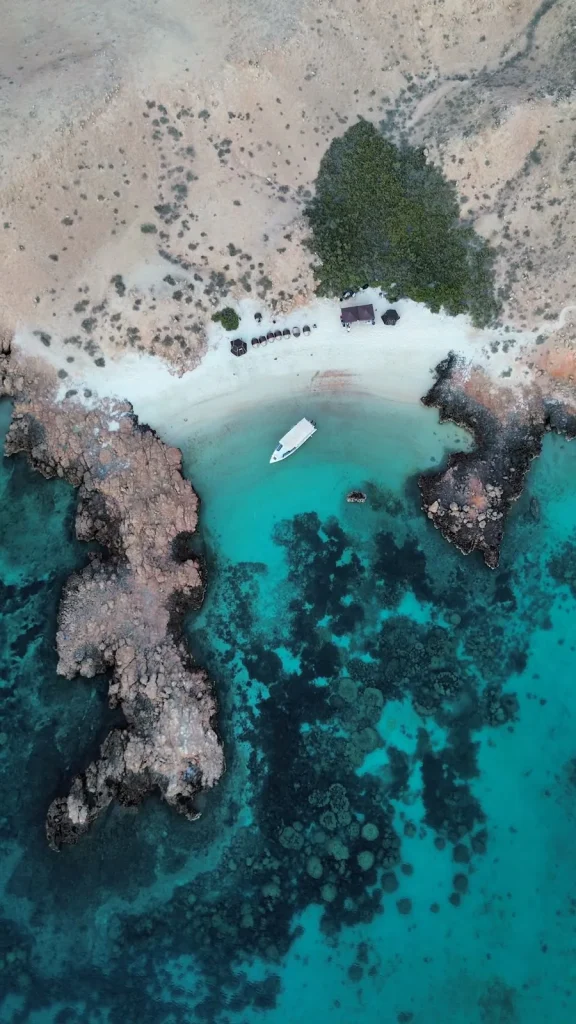
The reefs around the islands are some of the best developed in Oman: wide table corals, branching and boulder corals, soft corals, walls and shallow gardens. Some coral colonies here are thought to be more than 200 years old. Coral grows very slowly and breaks easily, which is why anchoring on it, standing on it or taking pieces of it is not allowed.
Turtle nesting beaches
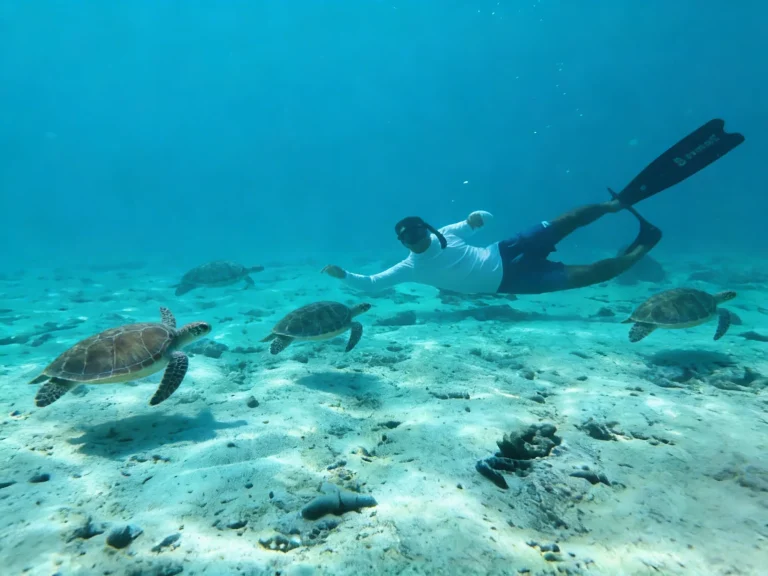
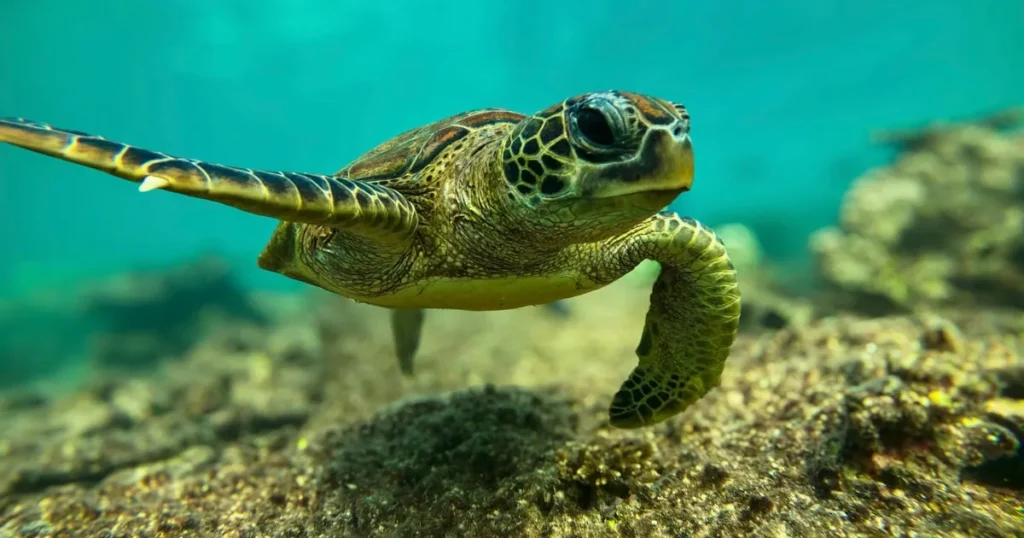
The islands are one of the most important nesting sites in the region for hawksbill turtles, which are critically endangered worldwide: hundreds of females nest here, on beaches only a few metres wide. Green turtles nest here too. Both kinds feed around the reefs all year, which is why snorkelers see them so often. Our guide to swimming with turtles explains how to behave around them.
Breeding seabirds
The rocky islands are a safe place for seabirds to raise their chicks, away from people and predators. Birds that breed here include ospreys, sooty falcons, red-billed tropicbirds, brown noddies, sooty gulls and several kinds of tern. Many of them nest in the summer, at the same time as the turtles.
The rules for visitors
Most rules come down to one idea: look, but leave everything as you found it. This is what is and isn’t allowed for visitors:
| Activity | November to April | May to October |
|---|---|---|
| Boat trips, swimming, snorkeling | Allowed, with a permit | Allowed, with a permit |
| Scuba diving | Allowed, with a diving permit | Allowed, with a diving permit |
| Landing on the beaches | Allowed | Closed for nesting |
| Camping overnight | Designated sites only, with a camping permit | Closed |
| Taking shells, coral, stones or animals | Not allowed | |
| Pets | Not allowed | |
| Drones | Only with permission | |
Summary of the Environment Authority’s rules for the reserve. Rules can change: your crew will tell you on the day.
The reserve code
- Take nothing: no shells, coral, stones or animals, alive or dead.
- Never touch, chase, feed or ride a turtle or any other animal.
- Don’t stand on coral, and keep your fins off the reef.
- Keep away from nests and nesting birds; stay off the beaches when they are closed.
- Leave no litter, on the beach or in the sea.
- Leave fishermen’s nets and traps alone.
- Use reef-safe sunscreen and follow the crew’s instructions.
Breaking the rules can mean a fine, for visitors and for boat companies. Fishing is not banned outright: local fishermen who live near the reserve can fish under a permit, but nets over the coral reefs are not allowed.
Do you need a permit to visit the Daymaniyat Islands?
Yes. Everyone who enters the reserve needs an entry permit from the Environment Authority, and there are separate permits for diving and for staying overnight. Permits are bought online, and the boat has to be registered. You do not need a tour company to get one: people with their own boat can apply. But there is no public ferry to the islands, so almost every visitor goes by boat trip.
On our trips the crew arranges the permits for you. They are included in the price of the shared snorkeling, full-day, scuba diving and camping trips; on a private boat they are added per person (3 OMR per adult, 1 OMR per child, under-3s free). Our trip cost guide shows the full prices.
Why are the beaches closed from May to October?
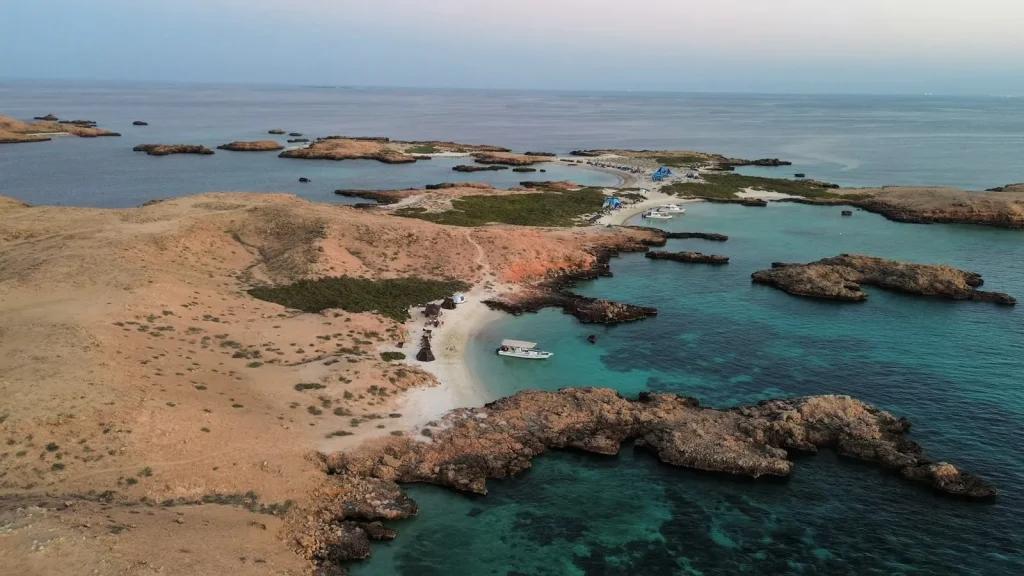
From 1 May to the end of October, turtles and seabirds nest on the islands, so landing and camping stop. Footsteps, lights and noise can crush nests or scare birds off their eggs. The sea stays open: boat trips, snorkeling and diving go ahead all year, and turtles are seen in the water in every month. The beaches open again on 1 November, which is when beach time and camping come back into our trips.
For the weather and sea in each month, see the best time to visit. Camping has its own rules, explained in is camping allowed on the Daymaniyat Islands?
What the reserve is up against
Protection doesn’t make the islands untouchable. These are the main pressures on the reserve:
- Storms and warm water: Cyclone Gonu in 2007, a large red tide in 2008 and 2009, and Cyclone Phet in 2010 killed more than half of Oman’s corals. Many reefs have recovered since, but hot summers can still bleach coral, as happened across Oman in 2021.
- Crown-of-thorns starfish: these coral-eating starfish have had outbreaks here. In 2016 a survey team removed 151 of them from a small area of reef, and table corals have been hit hard in recent years.
- Lost nets and litter: abandoned fishing nets and plastic wash onto the reefs and beaches. Clean-ups by the Environment Authority, dive teams and volunteers have pulled out nets and rubbish.
- More visitors: the Environment Authority counted about 71,000 visitors in 2023 and about 137,000 in 2025, almost twice as many in two years. The rules matter more every year.
How we visit the reserve
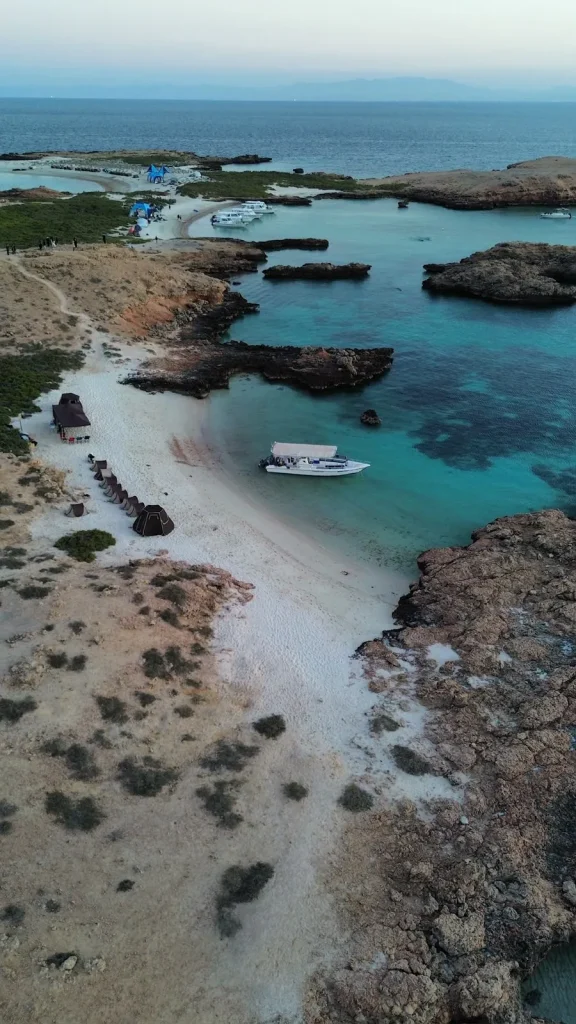
- A briefing before every trip, covering safety and the reserve rules.
- The captain chooses the stops on the day, by the wind, the current and the visibility.
- Beach time only from November to April; from May to October we snorkel and dive but don’t land.
- Camping only in the designated areas, in season. There are no campfires: the crew prepares the barbecue.
- Turtles are never chased or touched. Wildlife is wild: no sighting is ever guaranteed.
Ways to see the reserve
- Half a day
- Shared snorkeling, two stops, all year. See the trip
- A whole day
- Snorkeling, lunch and island beach time, November to April. See the trip
- A night
- Island camping, November to April. See the trip
- Under the water
- A first dive or two guided dives. See the trip
Oman’s other coastal and marine reserves
The Daymaniyat Islands are one of a small number of reserves in Oman that protect the sea itself. If you are interested in Oman’s nature, these are the other coastal reserves:
| Reserve | Protects | Since |
|---|---|---|
| Qurm Nature Reserve, Muscat | Mangroves and birds; Oman’s first reserve | 1975 |
| Daymaniyat Islands | Coral reefs, nesting turtles, seabirds | 1996 |
| Turtle Reserve, Ras Al Hadd and Ras Al Jinz | Green turtle nesting beaches | 1996 |
| Khawr reserves, Salalah | Coastal lagoons and birds | 1997 |
| Wetlands Reserve, Al Wusta | Wetlands and migrating birds, including Barr Al Hikman | 2014 |
| Hallaniyat Islands | The sea around the islands in the Arabian Sea | 2025 |
Years are when each area was declared a reserve by Royal Decree.
If you want to watch turtles come ashore to nest, Ras Al Jinz near Sur is the place: the Daymaniyat beaches are closed during nesting, and our trips don’t go to Ras Al Jinz.
Frequently asked questions
Why are the Daymaniyat Islands protected?
To protect their coral reefs, the beaches where hawksbill and green turtles nest, and the islands where seabirds breed. The islands have been a nature reserve since 1996, by Royal Decree 23/1996.
Who manages the Daymaniyat Islands Nature Reserve?
The Environment Authority, which took over from the former Ministry of Environment and Climate Affairs in 2020. Its rangers have a station on the largest island.
Are the Daymaniyat Islands a UNESCO World Heritage Site?
No. Oman added the reserve to UNESCO’s Tentative List in 2013, which means it may be nominated in future, but it is not a World Heritage Site.
Do you need a permit to visit the Daymaniyat Islands?
Yes. Every visitor needs an entry permit from the Environment Authority, with separate permits for diving and overnight stays. On our trips the crew arranges them, and they are included in the price except on the private boat, where they are added per person.
Can you visit the Daymaniyat Islands without a tour?
Yes, if you have your own registered boat and buy the permits. There is no public ferry, so almost every visitor goes on a boat trip.
Can you visit the Daymaniyat Islands in summer?
Yes. Boat trips, snorkeling and diving run all year. Only the beaches close, from 1 May to the end of October, while turtles and seabirds nest.
Is fishing allowed at the Daymaniyat Islands?
Not for visitors on a trip. Local fishermen who live near the reserve can fish under a permit, but nets over the coral reefs are not allowed.
Can I take shells or coral from the Daymaniyat Islands?
No. Taking shells, coral, stones or animals, alive or dead, is not allowed anywhere in the reserve.
Can you fly a drone at the Daymaniyat Islands?
Only with permission from the Environment Authority. Ask us before your trip if you want to bring one.
Visit the reserve with us
Our half-day snorkeling trip leaves Seeb Marina in the morning and in the afternoon, permits included. Message us on WhatsApp with your date.
Take the trip
30 OMR per adult, 15 OMR per child + VAT
- About 4 hours
- Seeb Marina
- All year
Take the trip
60 OMR per adult, 30 OMR per child + VAT
- 08:30 to 18:00
- Seeb Marina
- 1 Nov to 30 Apr
Take the trip
100 OMR per adult, 50 OMR per child + VAT
- 2 days, 1 night
- Seeb Marina
- 1 Nov to 30 Apr