On this page
- Do you need to know how to swim to snorkel?
- How non-swimmers snorkel on our boat, step by step
- What snorkeling with a life jacket is like
- Tips that help nervous first-timers most
- Who should check before snorkeling
- Can you stay on the boat instead?
- Which trip suits non-swimmers best?
- Frequently asked questions
- Ready to try it?
Short answer: yes, you can snorkel even if you can’t swim. On our Daymaniyat Islands trips everyone wears a life jacket, which keeps you floating at the surface while you look down at the reef through your mask. You can hold on to the boat’s stairs until you feel ready, our crew are watching the whole time, and a crew member will get in the water with you if you need help, feel uncomfortable or simply ask. If you decide snorkeling isn’t for you, you can stay on the boat.
“I can’t swim, can I still come?” is one of the questions we hear most on WhatsApp. This guide answers it honestly: what snorkeling with a life jacket feels like, what happens step by step on our boat, the tips that help nervous first-timers most, and who should check with a doctor first.
Snorkeling as a non-swimmer, at a glance
- Do you need to swim?
- No. A life jacket keeps you at the surface.
- Life jackets
- For every guest, adults and children
- Something to hold
- The boat’s stairs, until you are ready to let go
- Crew help
- Always watching. A crew member gets in the water if you need help or ask.
- Before you get in
- A briefing on mask fit, breathing and hand signals
- Equipment
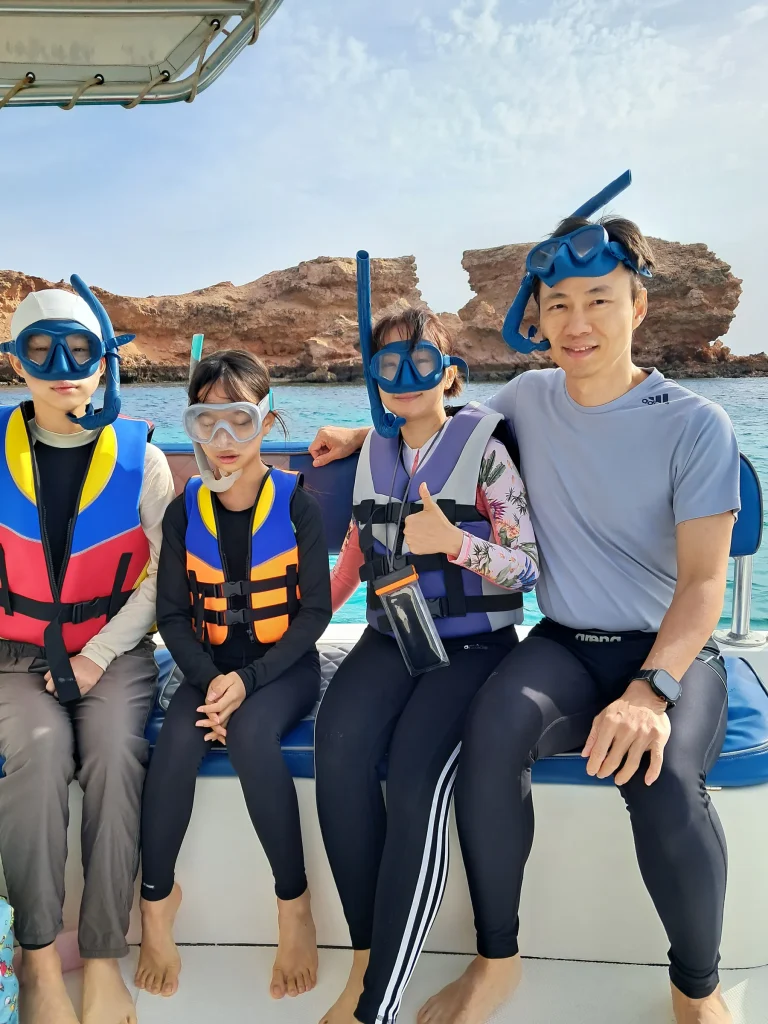
- Mask, snorkel, fins and life jacket included
- Rather not?
- Stay on the boat. Nobody has to get in.
Do you need to know how to swim to snorkel?
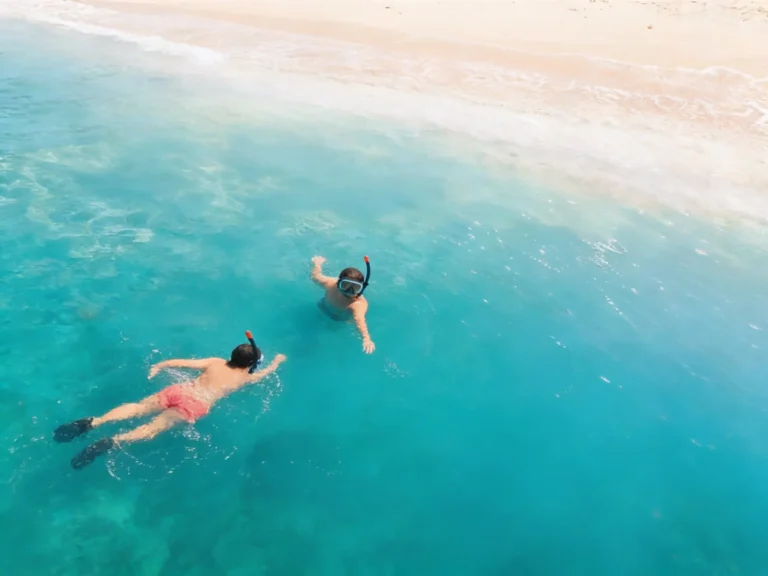
No. Snorkeling means floating face down at the surface and breathing through a tube while you watch what is underneath you. You don’t need to dive down or swim far, and with a life jacket on you can’t sink. That is why non-swimmers and children can snorkel with us.
To be honest about it: being able to swim makes snorkeling more relaxed, because you feel at home in the water. If you can’t swim, the trick is to stay close to the boat, keep your life jacket on and fastened the whole time, and tell the crew you are a non-swimmer, so they keep an eye on you.
How non-swimmers snorkel on our boat, step by step
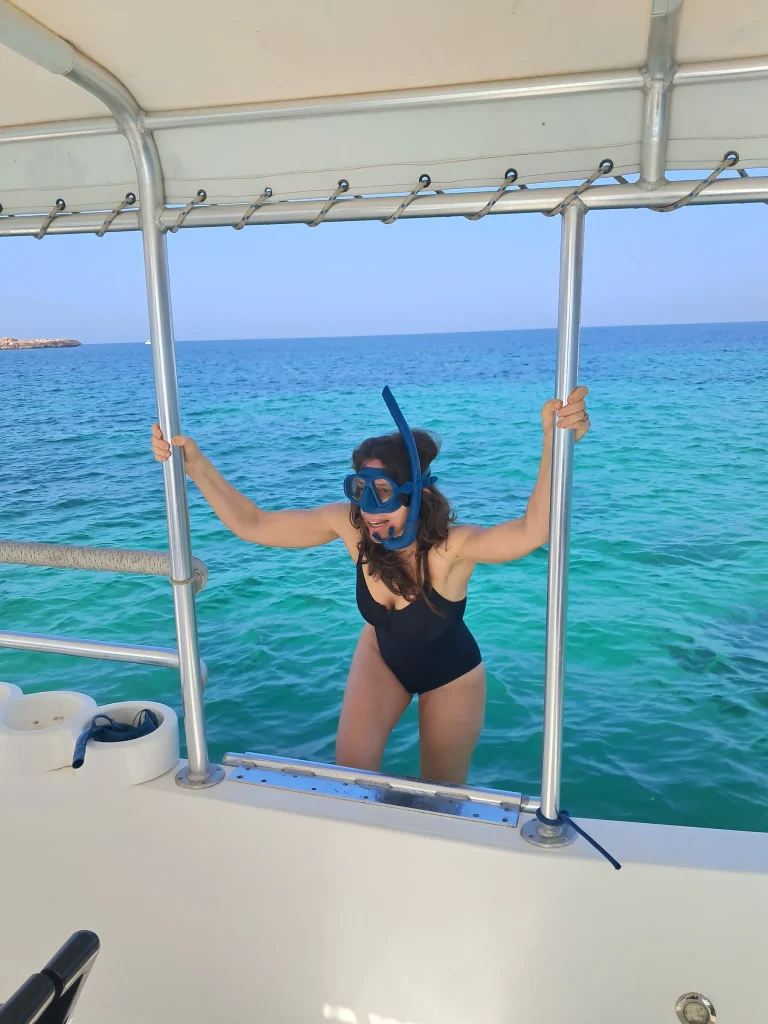
- The briefing. Before the first stop the crew show you how to fit your mask, how to breathe through the snorkel and the hand signals you can use in the water. Tell them now that you can’t swim.
- Life jacket on. Fasten every strap so it sits snugly. A loose jacket rides up around your ears; a snug one holds you flat and steady.
- Mask and fins on, on the stairs. Sit or stand on the boat’s stairs, put your face in the water and practise breathing through the snorkel while you hold on. Take as long as you like.
- Let go when you are ready. Lie forward, let the life jacket float you, and look down. Small, slow kicks with the fins are enough to move.
- Help is close. The crew watch everyone in the water. If you need help, feel uncomfortable or want someone next to you, raise your hand or call out and a crew member will get in with you.
- Come back whenever you like. Swim back to the stairs, rest on board, and try again at the second stop if you want to.
What snorkeling with a life jacket is like
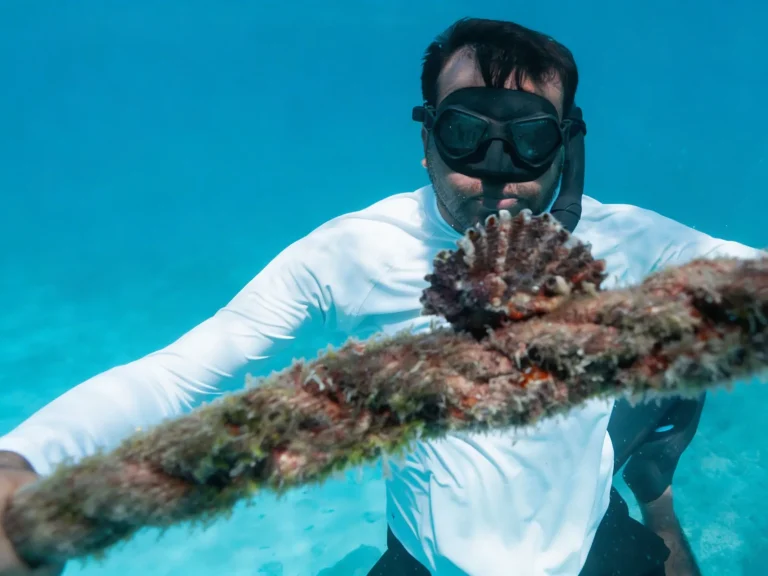
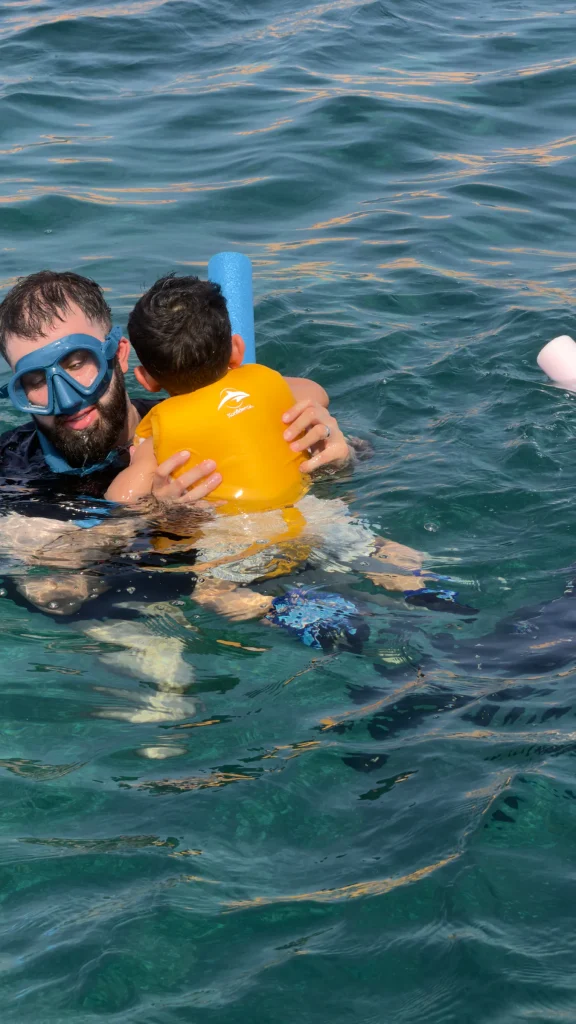
A life jacket lifts your shoulders and chest, so you float with your face in the water and the snorkel pointing up. Most non-swimmers are surprised how little effort it takes: you lie still, breathe, and the reef is below you. Turtles, reef fish and coral are all things you see from the surface, so you miss very little by staying there.
Two things to expect. First, you can’t dive down with a life jacket on, which is fine: that is exactly what keeps you safe. Second, the jacket can push you slightly upright at first. Stretch out flat, look straight down rather than ahead, and you will settle.
Tips that help nervous first-timers most
Before and during your first snorkel
- Breathe slowly through your mouth. Long, calm breaths. Fast breathing is what makes people feel short of air.
- Fit the mask without hair under it. Strap above your ears, snug but not tight. Hair in the seal lets water in.
- If water gets in the snorkel, lift your head, blow out hard through the tube, then carry on.
- If water gets in the mask, hold on to the stairs or float on your back, lift the bottom of the mask and let it drain.
- If you feel panicky, stop, lift your head, hold the life jacket and raise your hand. Floating still is always safe.
- Stay near the boat and near the crew, especially on your first swim.
- Choose the morning trip in summer: the sea is often calmer and the light clearer.
Who should check before snorkeling
Snorkeling is gentle, but it is still exercise in the sea. If you have a heart condition, asthma, are pregnant or have any similar health concern, please tell us when you book and ask your doctor before the trip.
Children who can’t swim snorkel in a life jacket too, always with a parent next to them. Our guide to the islands with kids covers ages, prices and what helps small children.
Can you stay on the boat instead?
Yes. Some guests come for the boat ride and the island views and never get in. The boats have shade and a toilet, and from November to April the half-day trip also stops at an island beach. Guests who stay on board pay the normal fare, because the fare covers the boat seat and the whole trip.
Which trip suits non-swimmers best?
- Half-day snorkeling, morning: about four hours with two snorkel stops. The captain chooses the stops on the day by the sea, the weather and the marine life.
- Full-day island trip (November to April): snorkeling plus a long beach stop with a shallow area, which is the easiest place to get used to the water.
- Private boat: just your group, and you decide how long to snorkel and how long to rest. The captain still chooses the snorkel spots on the day, by the sea, the weather and safety.
- Dolphin tour: two hours on the boat with no swimming at all, if the water isn’t for you.
New to all of it? Our guide to your first Daymaniyat Islands trip walks through the whole day, and the best snorkeling spots in Oman compares the islands with other places to snorkel.
Frequently asked questions
Can you snorkel if you can’t swim?
Yes. On our trips everyone wears a life jacket, which keeps you floating at the surface while you breathe through the snorkel and look down at the reef. You can hold on to the boat’s stairs until you feel ready, and the crew are watching the whole time.
Do you need to know how to swim to snorkel?
No. Snorkeling means floating at the surface, not diving. Being able to swim makes it more relaxed, so non-swimmers should stay close to the boat, keep their life jacket fastened and tell the crew they can’t swim.
Is snorkeling safe for non-swimmers?
For most people, yes, with a fastened life jacket, slow breathing and the crew close by. The captain checks the sea before every trip and decides when it is safe to get in. If you have a heart condition, asthma, are pregnant or have a similar health concern, tell us in advance and ask your doctor first.
Can you snorkel with a life jacket on?
Yes, and on our trips everyone does. The life jacket keeps you at the surface. You can’t dive down with it on, but turtles, reef fish and coral can all be seen from the surface.
Will a crew member get in the water with me?
Yes, if you need help, feel uncomfortable or ask for it. Raise your hand or call out and a crew member will come in with you.
Is there something to hold on to in the water?
Yes, the boat’s stairs. Put your face in the water and practise breathing through the snorkel while you hold on, then let go when you feel ready.
Can children who can’t swim go snorkeling?
Yes, in a life jacket and always with a parent next to them in the water. Under-3s go free on every trip except camping.
What if I don’t want to get in the water?
You can stay on the boat. Our island boats have shade and a toilet. Guests who stay on board pay the normal fare, because it covers the boat seat and the whole trip.
Is snorkeling equipment included?
Yes. A mask, snorkel, fins and a life jacket are included on our snorkeling trips. You are welcome to bring your own mask if you prefer.
Ready to try it?
Message us on WhatsApp, say you are a non-swimmer, and ask anything you are unsure about. We reply at any time of day, usually within 10 to 30 minutes.
Take the trip
30 OMR per adult, 15 OMR per child + VAT
- About 4 hours
- Seeb Marina
- All year
Take the trip
60 OMR per adult, 30 OMR per child + VAT
- 08:30 to 18:00
- Seeb Marina
- 1 Nov to 30 Apr
Take the trip
From 230 OMR per boat + VAT
- About 4 hours
- Seeb Marina
- All year