On this page
- 1. Daymaniyat Islands, Muscat: the best all-round snorkeling in Oman
- 2. Bandar Khayran: calm bays south-east of Muscat
- 3. Fahal Island: Muscat’s “Shark Island”
- 4. Al Sawadi Islands: a day out north of Muscat
- 5. Shore snorkeling in Muscat
- 6. Musandam: fjords and dhow cruises
- 7. Mirbat and Salalah: the south coast
- Which spot is right for you?
- When is the best time to snorkel in Oman?
- Snorkeling safely in Oman
- Frequently asked questions
- Snorkel the Daymaniyat Islands with us
Short answer: the best snorkeling in Oman for most visitors is at the Daymaniyat Islands, a protected nature reserve 25 to 30 minutes by boat from Seeb Marina in Muscat, where turtles are commonly seen all year. Near Muscat, Bandar Khayran is a sheltered bay that is good for beginners, and Fahal Island is better known for diving. Further away, Musandam has snorkel stops on dhow cruises from Khasab, and Mirbat near Salalah has good shore snorkeling outside the monsoon season.
We run snorkeling trips to the Daymaniyat Islands, so we are honest about where we go and where we don’t. This guide compares the main spots in Oman: how to get there from Muscat, how you snorkel there, what you might see, and the best time to go.
| Spot | From Muscat | Best for |
|---|---|---|
| Daymaniyat Islands | 25 to 30 min by boat from Seeb Marina | Turtles, coral, first-timers and families |
| Bandar Khayran | Boat from Marina Bandar Al Rowdha, or by road | Calm, sheltered bay for beginners |
| Fahal Island | A short boat ride off Muscat’s coast | Mainly divers; currents |
| Al Sawadi Islands | About 1 hour’s drive, then a short boat ride | A day out north of Muscat |
| Shore spots in Muscat | In the city | A quick swim, not big reefs |
| Musandam | Flight to Khasab, or by road from Dubai | Fjords and dhow cruises, in winter |
| Mirbat, Salalah | Flight to Salalah, then about 1 hour | Shore snorkeling, outside the monsoon |
We run trips only to the Daymaniyat Islands (and a dolphin tour). The other spots are run by other operators.
1. Daymaniyat Islands, Muscat: the best all-round snorkeling in Oman
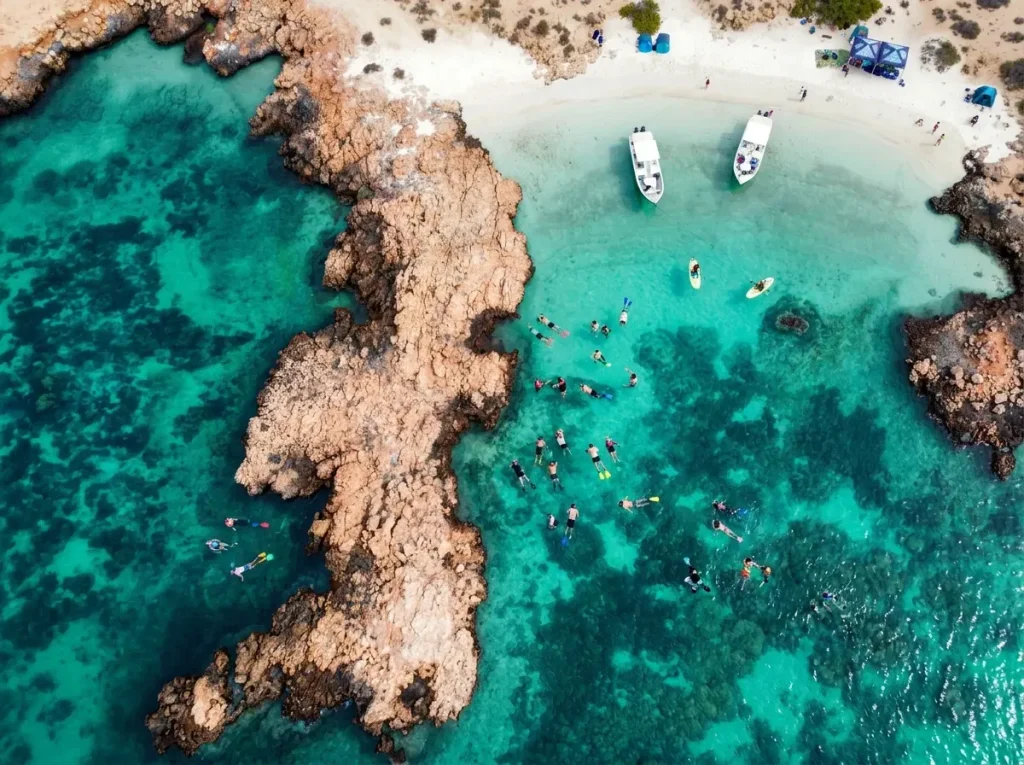
The Daymaniyat Islands have been a protected nature reserve since 1996: a group of small, uninhabited islands off the coast between Seeb and Barka, with coral gardens, rocky reefs and sandy bays. It is a classic island snorkeling trip, and an easy one from Muscat.
- Getting there: a boat trip from Seeb Marina, 25 to 30 minutes each way. You can’t visit without a boat.
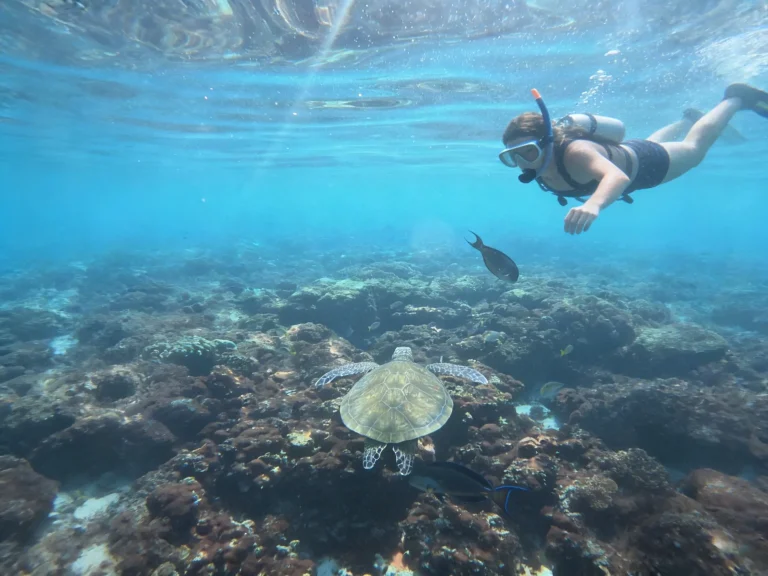
- What you might see: green and hawksbill turtles (commonly seen all year), reef fish over hard and soft coral, and sometimes reef sharks. Whale sharks are a chance from June to September.
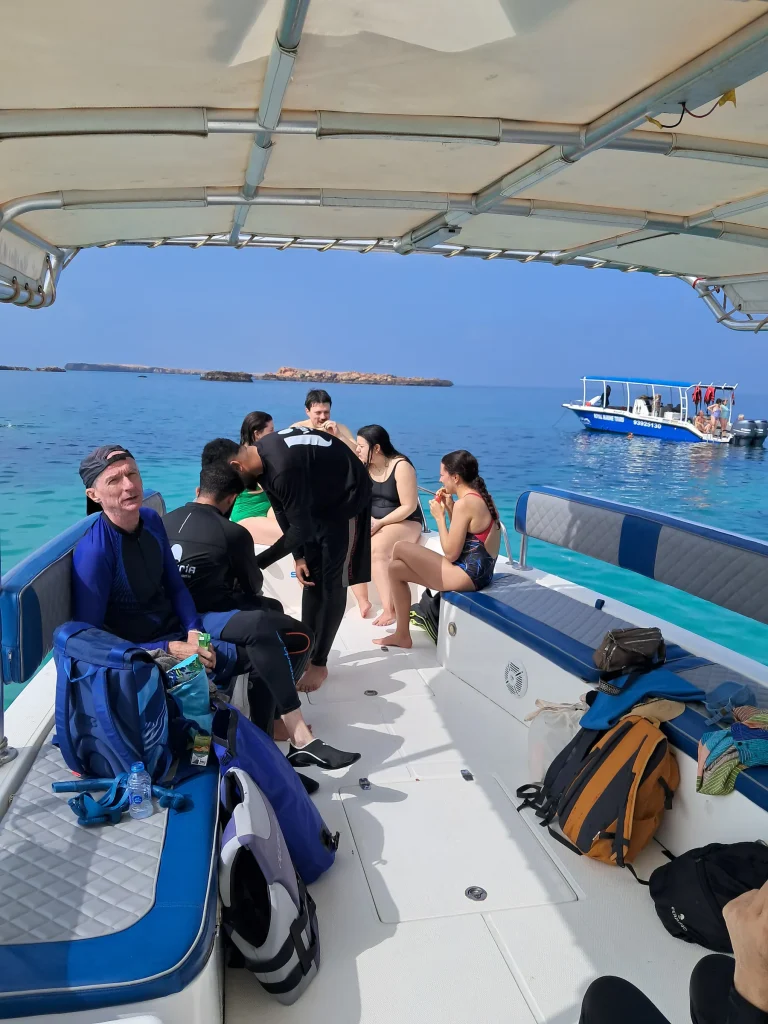
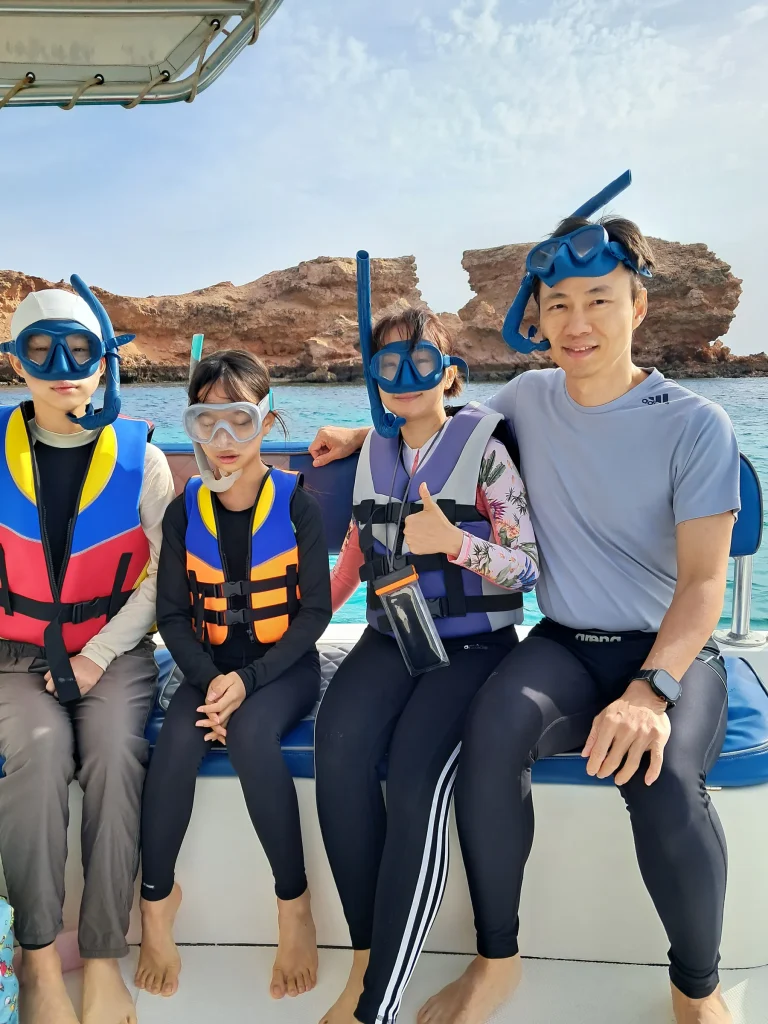
- How it works: on our half-day trip, the captain picks two snorkel stops on the day by the wind, the current and the visibility. Life jackets for everyone, so non-swimmers can join.
- When: all year. From November to April trips also stop at an island beach; from May to October the beaches are closed for turtle nesting and you snorkel from the boat.
See our half-day snorkeling trip, a private boat for your group, or the marine life guide.
2. Bandar Khayran: calm bays south-east of Muscat
Bandar Khayran (also written Bandar Al Khairan) is a group of sheltered, almost enclosed bays along the coast south-east of the city, past Qantab. The water is calm and easy to swim in, with coral and reef fish, and turtles are sometimes seen.
- Getting there: usually by boat from Marina Bandar Al Rowdha, often combined with a morning dolphin search. You can also drive there along the Qantab road.
- Good for: beginners and children who want calm water.
- Good to know: visibility can be lower than at the islands, and the marina is busy in the mornings. Our own dolphin tour leaves from the same marina but doesn’t include snorkeling.
3. Fahal Island: Muscat’s “Shark Island”
Fahal Island is a rocky island a few kilometres off Muscat’s coast, known locally as Shark Island. It is mainly a dive site: divers report reef sharks, turtles, rays, morays and schools of fish. Sources disagree on how suitable it is for snorkelers, and there can be currents, so it suits confident swimmers on a guided trip better than beginners.
4. Al Sawadi Islands: a day out north of Muscat
The small islands off Al Sawadi beach are about an hour’s drive north-west of Muscat. The snorkeling is around the islands rather than off the beach, so take a boat out. At low tide it looks possible to walk to the nearest island, but the tide can cut you off on the way back, so don’t risk it.
5. Shore snorkeling in Muscat
You can snorkel from some beaches and resort fronts in Muscat, for example around Bandar Jissah and Qantab, where the water is often sheltered. Expect reef fish and sometimes a turtle, but not the big reefs you find by boat. Wear reef shoes on rocky shallows, where there can be sea urchins, and ask locally about currents before you swim.
6. Musandam: fjords and dhow cruises
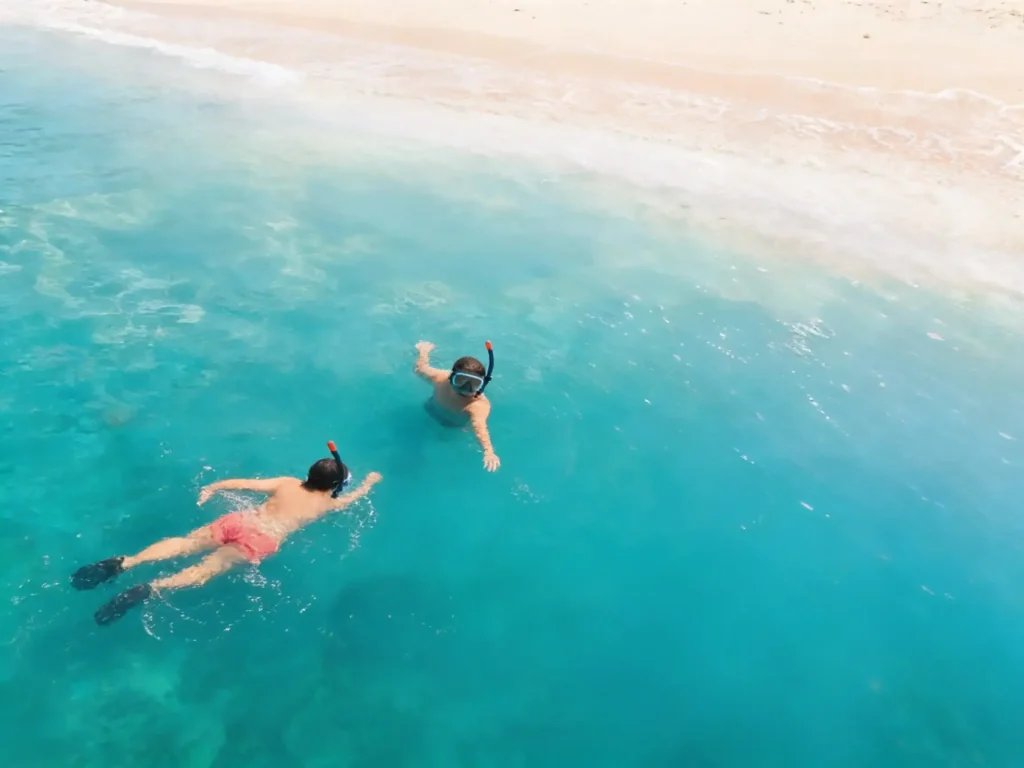
Musandam is Oman’s northern peninsula, separated from the rest of the country by the UAE. Snorkeling there is usually a stop on a dhow cruise through the fjords from Khasab, for example around Telegraph Island, and dolphins are often seen on the way, though not guaranteed.
- Getting there: a short flight from Muscat to Khasab, or by road from Dubai or Ras Al Khaimah. Check the border rules for your nationality before driving in.
- When: winter, when the heat on land is bearable. The water is cooler there in winter than in Muscat, around 20 °C.
7. Mirbat and Salalah: the south coast
Mirbat, about 70 km east of Salalah in Dhofar, has shore snorkeling and diving in rocky bays, with reef fish found only in this region. Avoid the khareef monsoon, roughly June to September, when the sea is rough and dive centres close; go from about October to May. Ask locally before swimming, as some beaches have strong currents.
Further afield: Masirah and the Hallaniyat Islands
Masirah Island, reached by road and a ferry from Shannah, has shallow reefs and is a major turtle nesting island. The remote Hallaniyat Islands off Dhofar are a nature reserve visited mainly on liveaboard dive boats, and visits now need prior permission from the Environment Authority. Both are trips in themselves rather than an easy snorkel.
Which spot is right for you?
Choose by who you are
- First time snorkeling
- Daymaniyat Islands with a life jacket, or the calm bays of Bandar Khayran
- Families with children
- Daymaniyat Islands, especially the full day with beach time from November to April
- Want turtles
- Daymaniyat Islands, where they are commonly seen all year
- Only a few hours in Muscat
- A half-day trip to the Daymaniyat Islands, or a shore swim in the city
- Coming from Dubai
- Musandam by road, or fly or drive to Muscat for the islands
- Visiting Salalah
- Mirbat, outside the June to September monsoon
When is the best time to snorkel in Oman?
Around Muscat, snorkeling works all year: the sea is about 23 to 26 °C in winter and 29 to 31 °C in summer. November to April is the most comfortable on land; in summer, go in the morning. Visibility changes from week to week, and plankton blooms can make the water greener in patches in any season. In Dhofar, avoid the June to September monsoon; in Musandam, winter is the season. Our guide to the best time to visit has the weather and sea temperature for each month in Muscat.
Snorkeling safely in Oman
Before you get in
- Ask about currents. Some beaches and islands have strong currents; snorkel with a guide or where locals swim.
- Protect your feet. Wear reef shoes on rocky shores, where sea urchins live, and never stand on coral.
- Respect the sun. Wear a long-sleeved top and reef-safe sunscreen; the sun on the water is strong all year.
- Leave wildlife alone. Don’t touch, chase or feed anything, and take nothing from the reef.
- Check local warnings on beaches, for example for jellyfish.
- Wear a life jacket if you are not a confident swimmer.
Frequently asked questions
Where is the best snorkeling in Oman?
For most visitors, the Daymaniyat Islands, a protected nature reserve 25 to 30 minutes by boat from Seeb Marina in Muscat, where turtles are commonly seen all year. Bandar Khayran near Muscat, Musandam in the north and Mirbat near Salalah are other good areas.
Where can I go snorkeling in Muscat?
The Daymaniyat Islands by boat from Seeb Marina, the sheltered bays of Bandar Khayran by boat from Marina Bandar Al Rowdha, and shore spots around Bandar Jissah and Qantab for a quick swim.
Can you snorkel from the beach in Muscat?
Yes, at some sheltered beaches and resort fronts, but expect reef fish rather than big reefs. The best snorkeling is by boat, at the islands and bays.
Where is the best snorkeling in Oman for beginners?
The Daymaniyat Islands, where everyone gets a life jacket and the captain chooses calm stops, or the sheltered bays of Bandar Khayran.
When is the best time to snorkel in Oman?
Around Muscat, all year: November to April is the most comfortable on land, and in summer the morning is best. Avoid Dhofar in the June to September monsoon, and visit Musandam in winter.
Can you see turtles while snorkeling in Oman?
Yes. Green and hawksbill turtles are commonly seen around the Daymaniyat Islands all year, though never guaranteed, and sometimes in the bays near Muscat.
Is there coral in Oman?
Yes. The Daymaniyat Islands have coral gardens of hard and soft coral, and there are coral reefs in the bays south-east of Muscat and around Musandam and Mirbat.
Do I need my own snorkeling gear?
Not on a boat trip: masks, snorkeling equipment and life jackets are usually included. For shore snorkeling, bring your own mask and reef shoes.
Snorkel the Daymaniyat Islands with us
Our half-day snorkeling trip runs all year from Seeb Marina, morning and afternoon. See all trips and prices, or message us on WhatsApp with your date.
Take the trip
30 OMR per adult, 15 OMR per child + VAT
- About 4 hours
- Seeb Marina
- All year
Take the trip
60 OMR per adult, 30 OMR per child + VAT
- 08:30 to 18:00
- Seeb Marina
- 1 Nov to 30 Apr